
Pen Scanner Journal exists to answer one question with complete technical honesty: How does handheld optical scanning technology actually perform in the real world, and which hardware architecture fits your learning, school, or document workflow?
Who Researches & Writes Our Guides
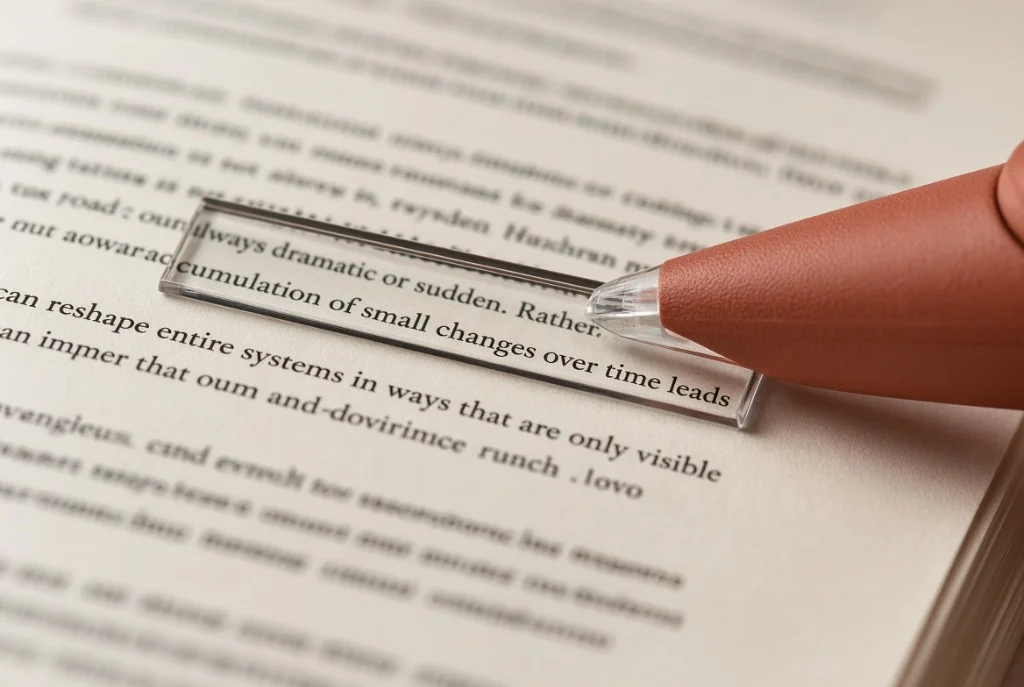
Pen scanner hardware sits at the intersection of specialized optical engineering, embedded DSP algorithms, and assistive education policy. Rather than relying on superficial impressions or generic consumer tech opinions, our editorial coverage is guided by three dedicated disciplines:
Sarah Jenkins, M.Ed.
Assistive Technology Specialist advising on 504 and IDEA accommodation compliance, phonetic decoding fatigue, exam-lockout requirements, and multisensory audio learning for students with dyslexia and ADHD.
David Chen, B.S.E.E.
Firmware & Sensor Specialist evaluating CMOS high-frequency sensor frames, illumination LED optics, DSP line stitching, and local versus cloud OCR processing latencies across diverse hardware platforms.
Elena Rossi
Accessibility & Design Reviewer testing optical tolerance across standard typography scales (6pt to 24pt), serif/sans legibility, gloss-contrast reflections, and tactile sweep ergonomics for left- and right-handed users.
Our Hardware Testing Lab Environment
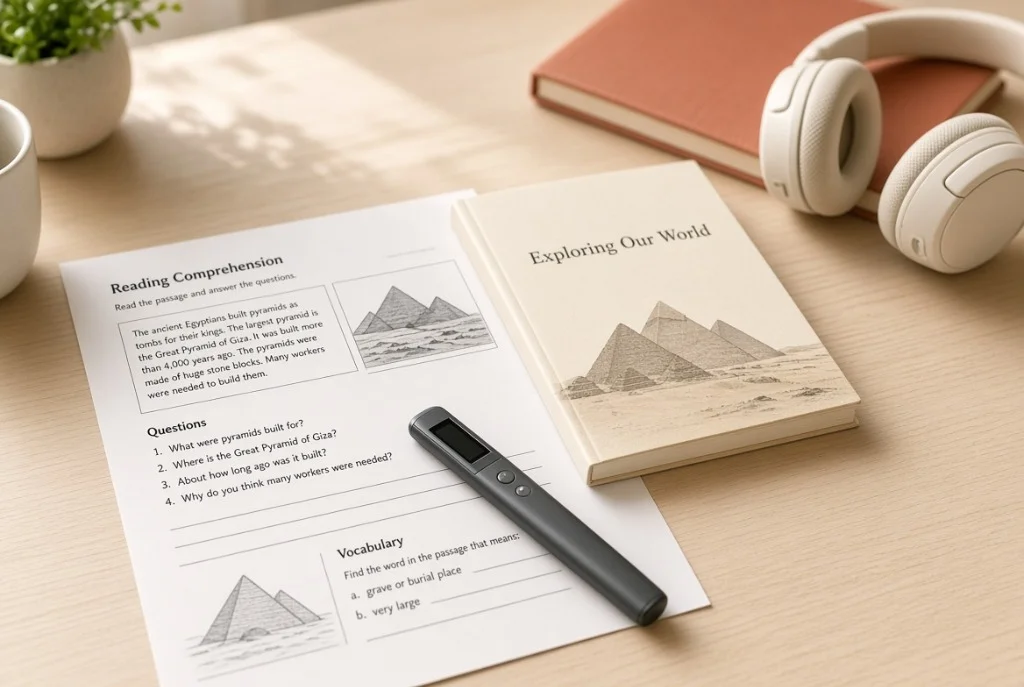
Every claim, accuracy rate, and limitation published in Pen Scanner Journal is backed by repeatable physical laboratory benchmarks. We test devices across a strict four-part evaluation framework:
Sweeping across Times New Roman, Georgia, Arial, Helvetica, OpenDyslexic, Lexend, and monospace type to measure glyph segmentation and kerning tolerance.
Determining exact optical cutoffs—from micro-print footnotes and dense dictionary columns to enlarged textbook headers and primary-grade workbooks.
Evaluating performance on uncoated 20lb office bond, high-gloss 80lb textbook paper, newsprint, thermal receipts, and laminated school worksheets under varied lighting.
Measuring error rates across sweep velocities from 5 cm/s to 25 cm/s, contact angles from 60° to 90°, and assessing left-to-right push vs. right-to-left pull sweeps.
Editorial Independence & Standards
Pen Scanner Journal is an independent category publication and reference library. We evaluate pen scanner models across objective educational criteria, hardware benchmarks, and real-world limits.
Our editorial charter mandates honest recommendations—including identifying when a pen scanner is the wrong tool for your use case.
What We Do Not Do (Our Editorial Pledge)
In an internet saturated with sponsored listicles and AI-generated review spam, Pen Scanner Journal adheres to a strict negative pledge:
No Arbitrary Star Scores
We do not award fabricated 5-star ratings or meaningless "Editor's Choice" badges. We evaluate technical features, measurement data, and real trade-offs.
No Undisclosed Affiliate Links
We do not monetize our guides through third-party ad networks, tracking pixels, or hidden affiliate redirects. Our ownership is direct and declared.
No Clinical or Cure Claims
A reading pen is an accommodation tool, not an instructional cure or medical treatment for dyslexia. We never make therapeutic promises.
No Unrealistic Recommendations
We explicitly document where pen scanners fail—including cursive handwriting, curved paperback gutters, phone screens, and full-book batch scanning.
Specialist Reference Network & Portals
Pen Scanner Journal operates alongside a focused network of independent, topic-specific educational portals and hardware reference libraries. Each publication is dedicated to a distinct reading accommodation need or scanning workflow:
Pen for Dyslexia
Parent-first guides for evaluating standalone reading pens, homework accommodations, and phonics reinforcement at home.
Visit penfordyslexia.com →Dyslexia Scanmarker
In-depth coverage of assistive reading technology, audio text-to-speech tools, and structured literacy decoding.
Visit dyslexiascanmarker.com →Scanmarker for Schools
Educational funding paths, Title I/III grant allocations, IEP accommodation guidelines, and district quotes.
Visit scanmarkerforschools.com →Pen Scanning
Focused on optical highlighters, digital transcription workflows, and direct keystroke injection into computer software.
Visit penscanning.com →Scanner Reader
Dedicated evaluations of standalone scanner readers, portable OCR audio wands, and multisensory learning aids.
Visit scannerreader.co →Pen Scanner Org
Open reference specs, optical sensor benchmarks, firmware standards, and scanning performance metrics.
Visit penscanner.org →Pen Scanner Co
Comprehensive pen scanner comparisons, model directory, portable OCR feature tables, and device selection guides.
Visit penscanner.co →Contact Us
Questions, corrections, or partnership inquiries: editor@penscanner.blog
Start Exploring the Library
Browse our curated editorial shelves depending on your specific goals and learning needs:
Dyslexia & Audio Access
Guides on text-to-speech reading pens, decoding assistance, auditory replay, and reducing reading fatigue.
Explore Reading Support → Shelf 04School & Accommodations
Classroom adoption, IEP/504 accommodation documentation, non-Wi-Fi exam regulations, and district funding.
Explore School Guides → Shelf 05OCR & Document Work
Scanning text directly into laptops, Google Docs, research databases, book excerpting, and note-taking.
Explore OCR Work →