
01 · The Basics
What a Pen Scanner Is
Understand what a pen scanner is, how optical character recognition works, core hardware architectures, and how reading pens support learning.
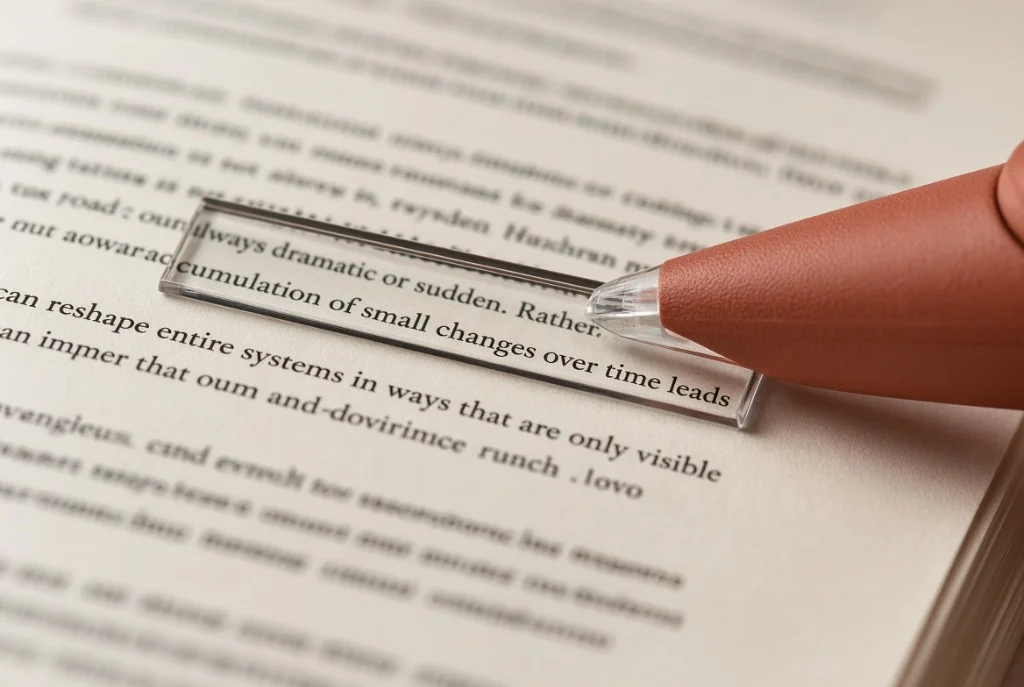
What Is a Pen Scanner? Complete Explainer & How It Works
What is a pen scanner? A complete, plain-English explainer covering optical character recognition, text-to-speech, core device types, and real-world limits.
Read →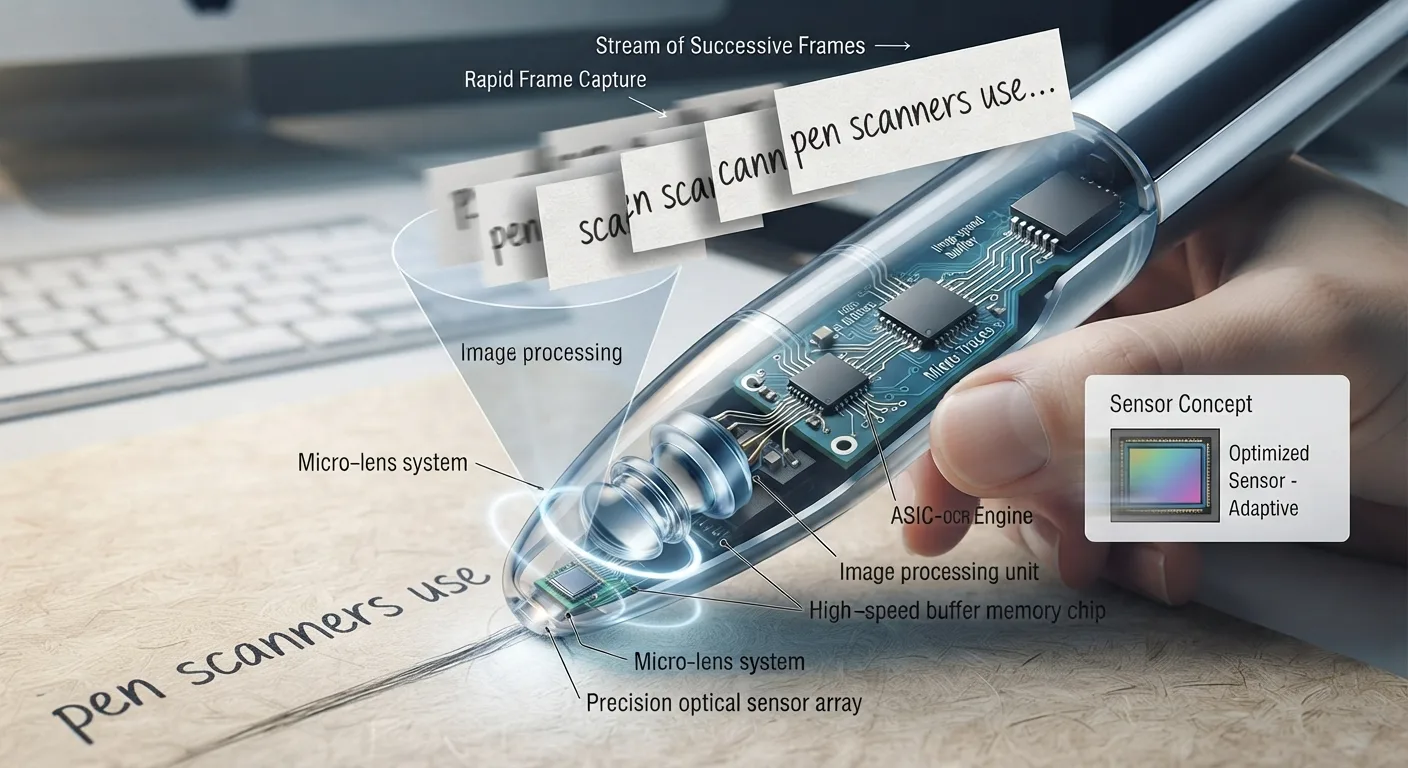
How Does a Pen Scanner Work?
A pen scanner photographs text as you swipe, runs it through onboard OCR, then speaks or stores the result — the whole process takes under a second.
Read →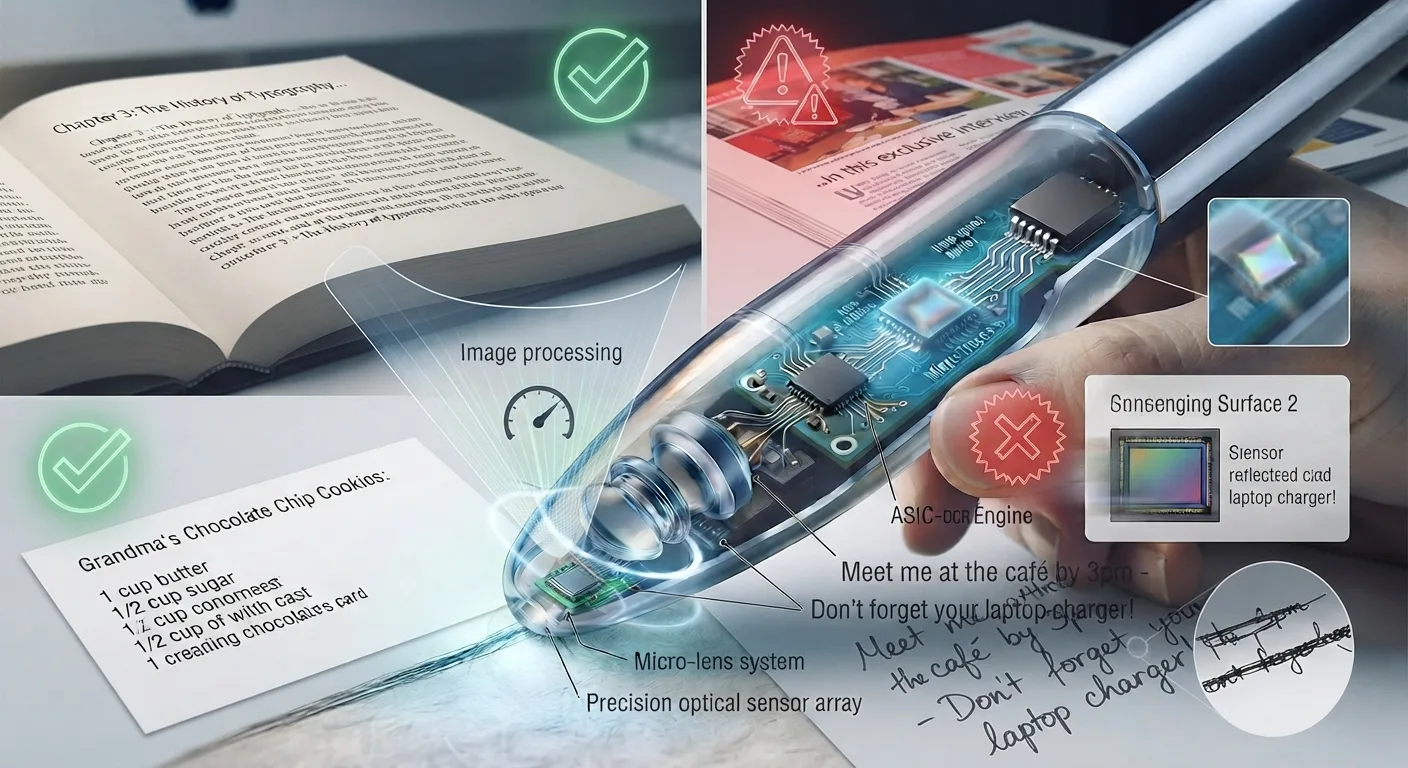
What Can You Scan With a Pen Scanner?
A pen scanner works best on clear black text on plain backgrounds — book pages, worksheets, recipe cards. It struggles with handwriting and glossy paper.
Read →02 · How It Works
OCR, Scanning & Accuracy
Explore how pen scanners capture text, optical sensor accuracy benchmarks, scanning book lines vs handwriting, and offline text-to-speech engines.
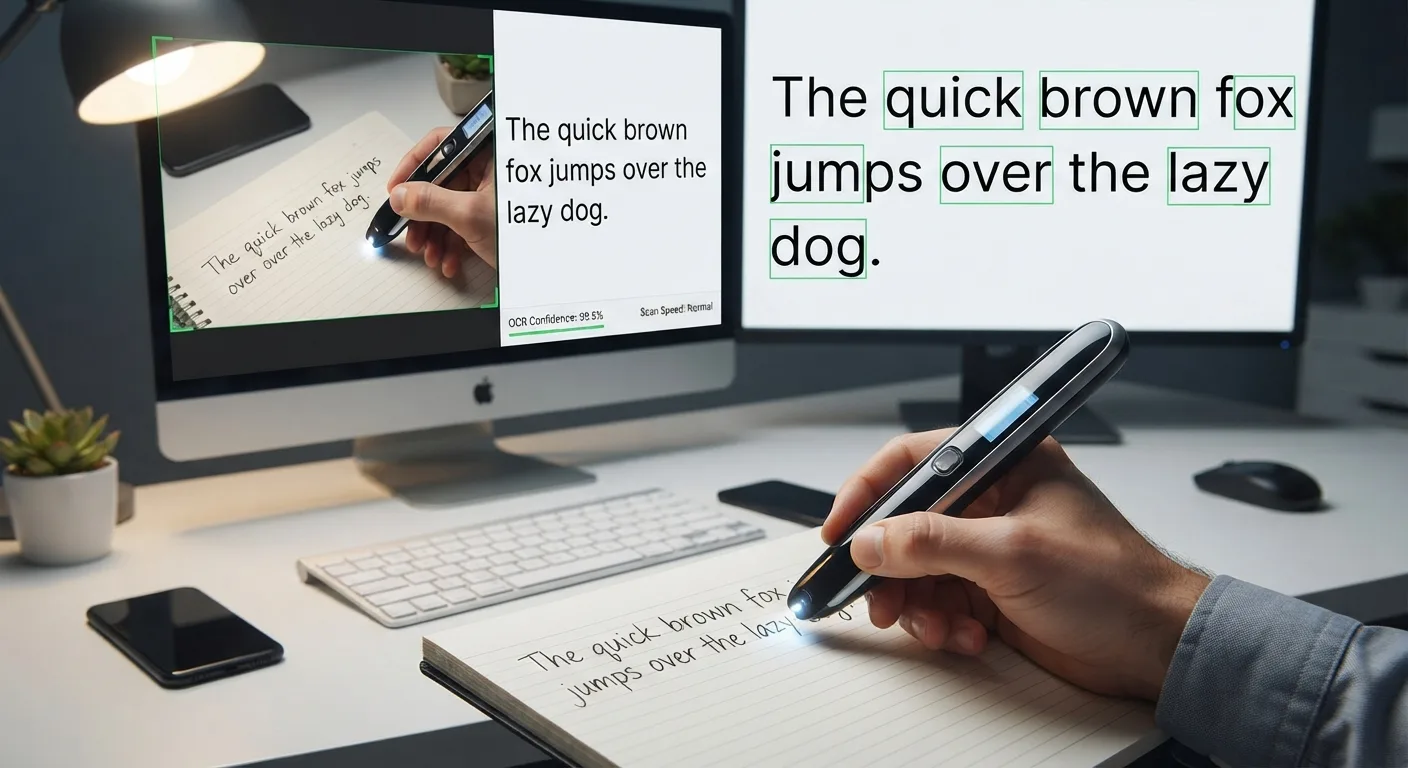
How Accurate Is OCR in Pen Scanners?
OCR in pen scanners is reliable on clear printed black text and less reliable on handwriting or glare-prone surfaces — print quality matters more than any spec.
Read →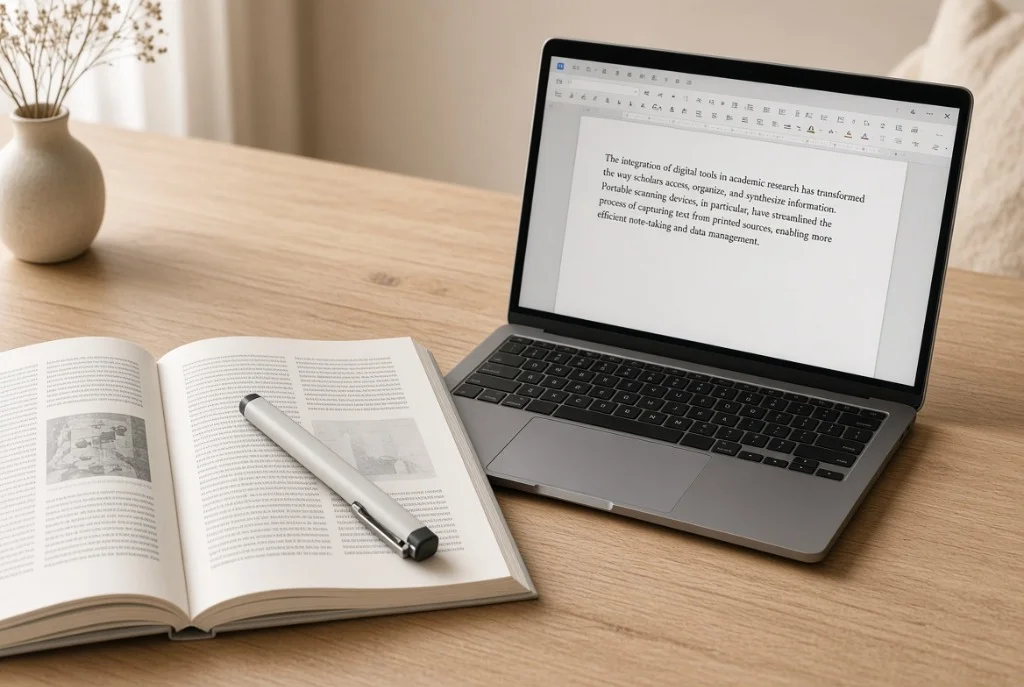
OCR Pen Scanners for Books: Digitizing Bound Pages Fast
How OCR pen scanners extract quotes and text from bound books directly into Word and Docs without spine damage, page warping, or manual typing.
Read →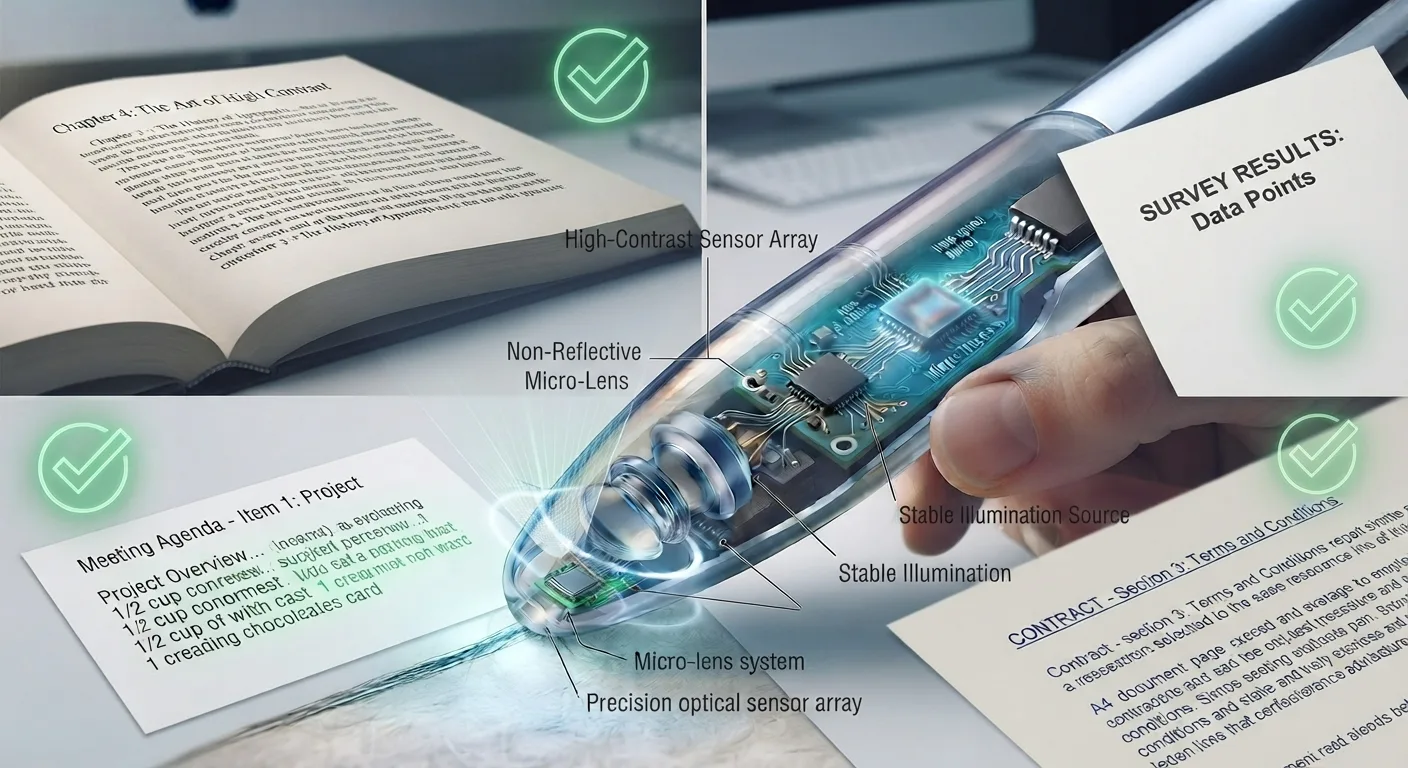
OCR for Handwritten Text
OCR for handwriting (properly ICR) is far less reliable than printed-text OCR. Neat block letters work best; cursive and messy writing need manual review.
Read →Find the right pen scanner
Leading pen scanners compared across standalone, connected, and exam-approved models. Browse by how you plan to read.
Pen Scanner Journal is the independent category reference library for pen scanners. How reviews work
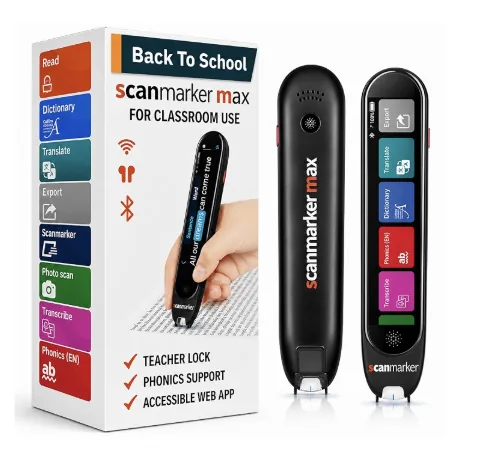
Scanmarker Max
The standalone powerhouse
From $299
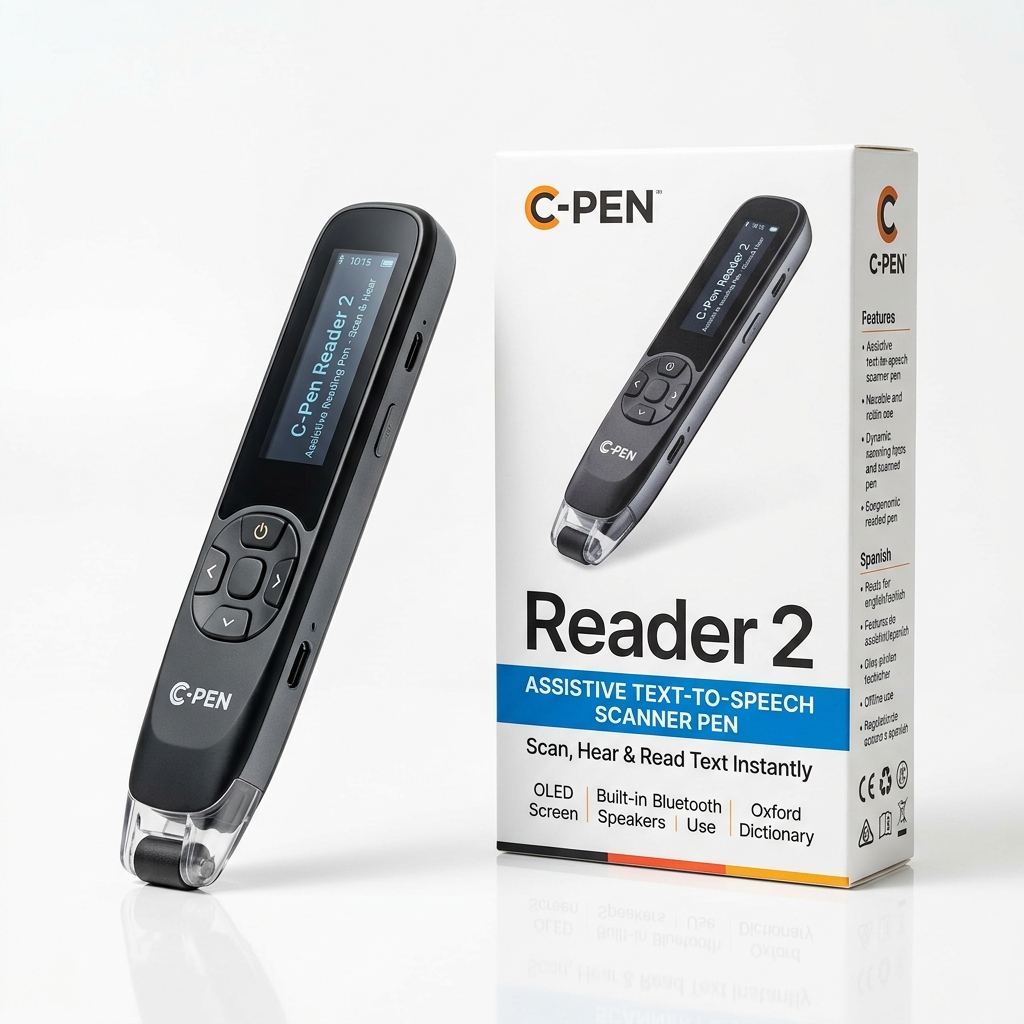
C-Pen Reader 2
The classic SEN reading benchmark
From $399
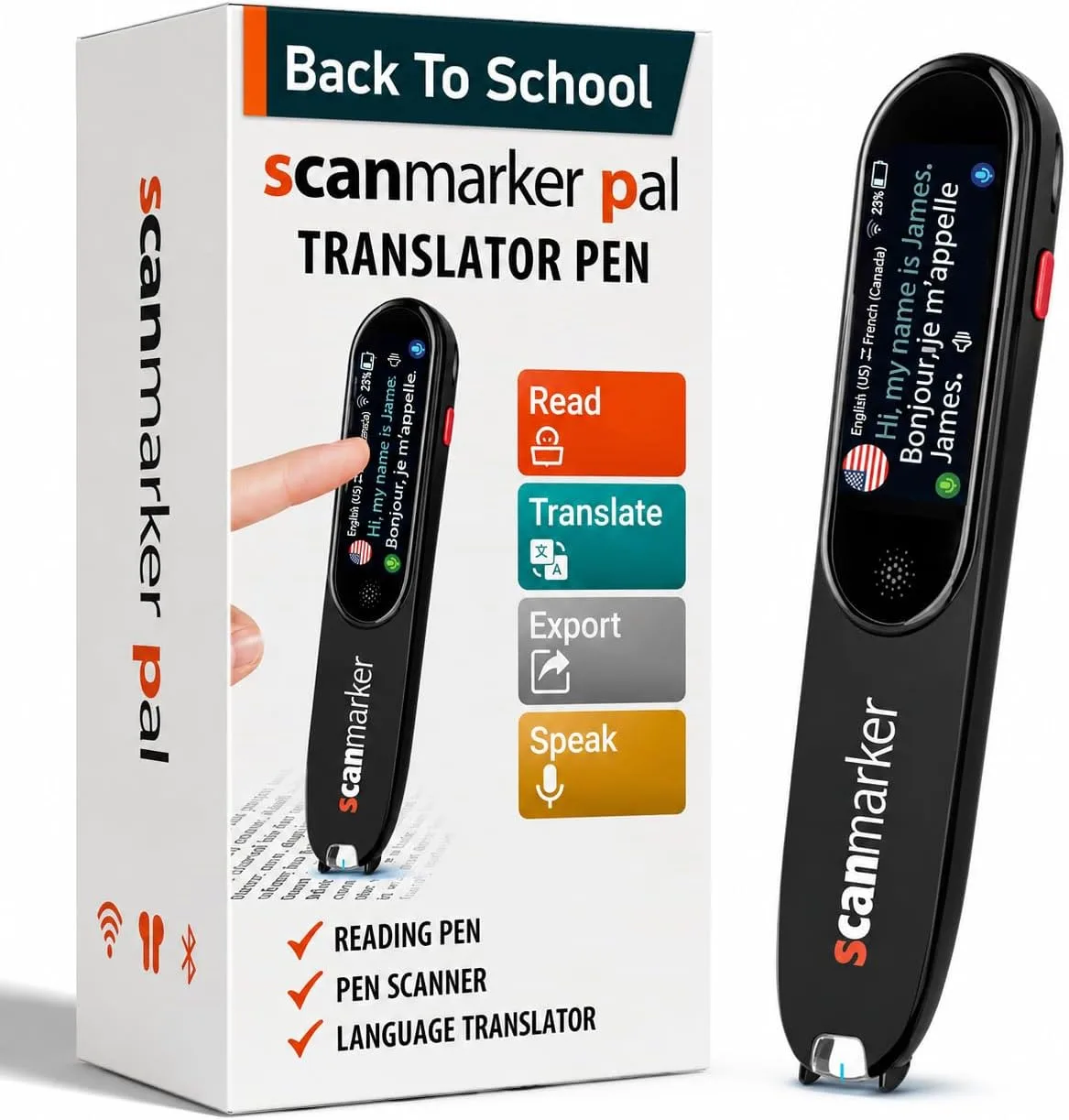
Scanmarker PAL
Simple, immediate read-aloud
From $179
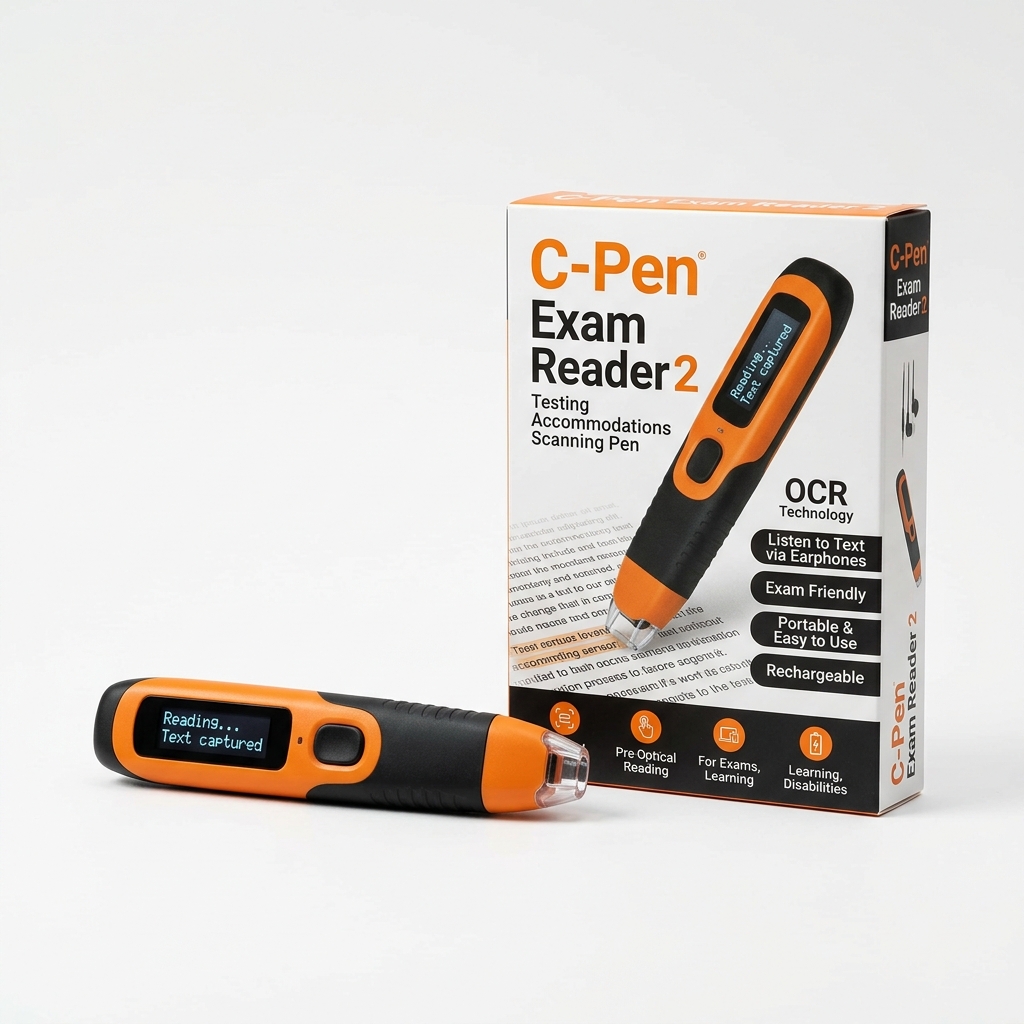
C-Pen Exam Reader 2
Locked exam-board certified reading pen
From $399
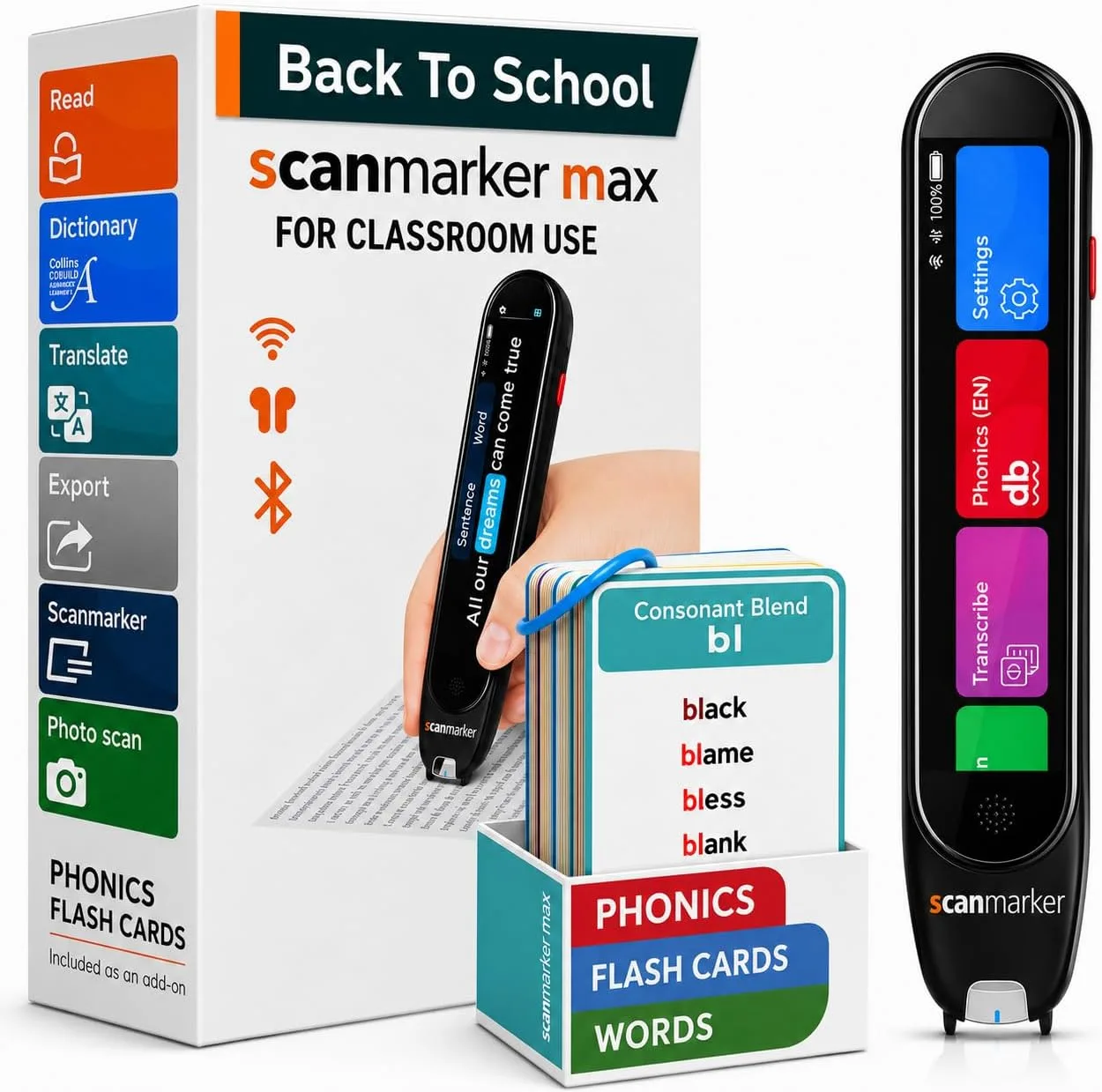
Scanmarker Max Bundle
Max + 200 phonics cards
From $319
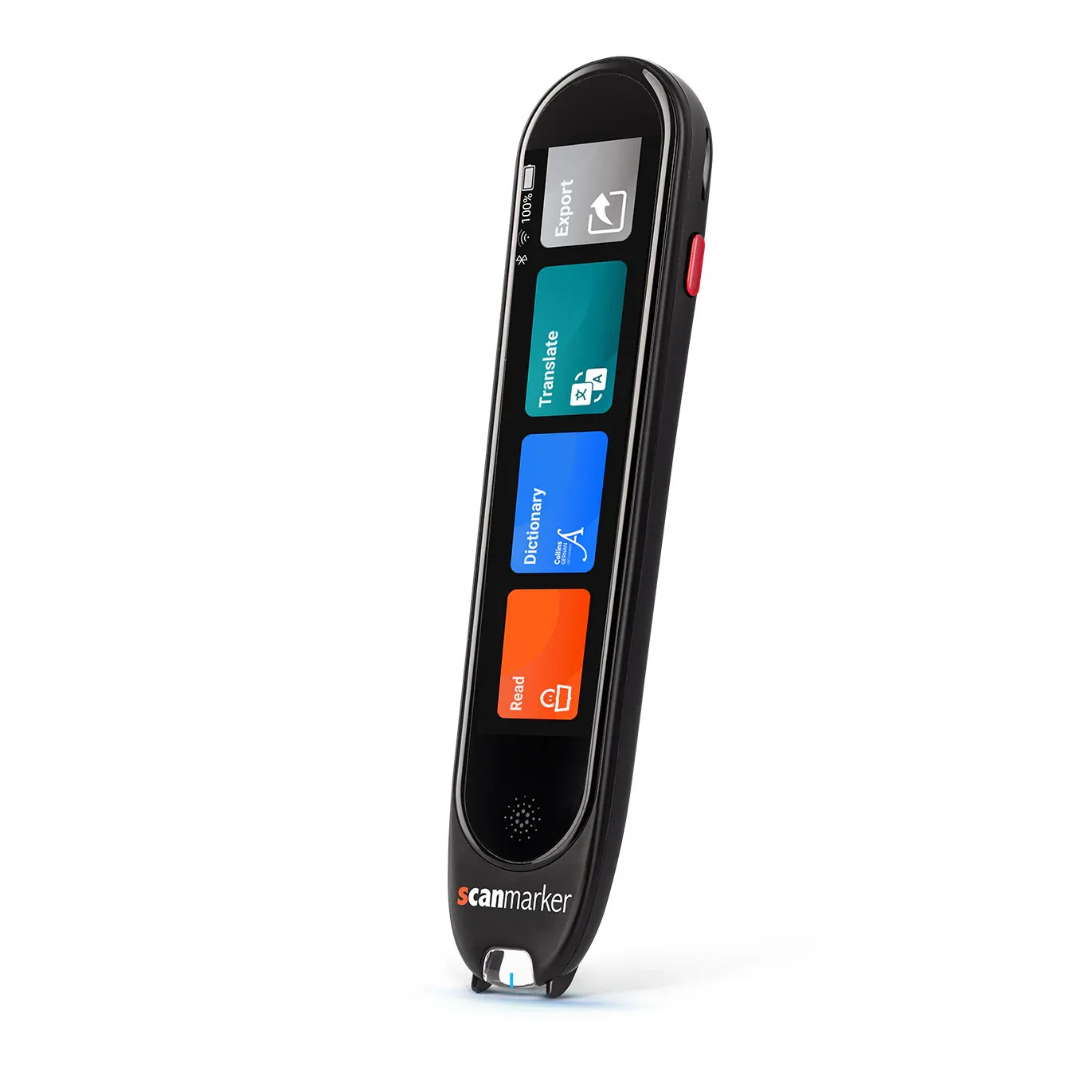
Scanmarker Pro
The connected reader
From $249
Scanmarker Air
Wireless, scans into any app
From $169
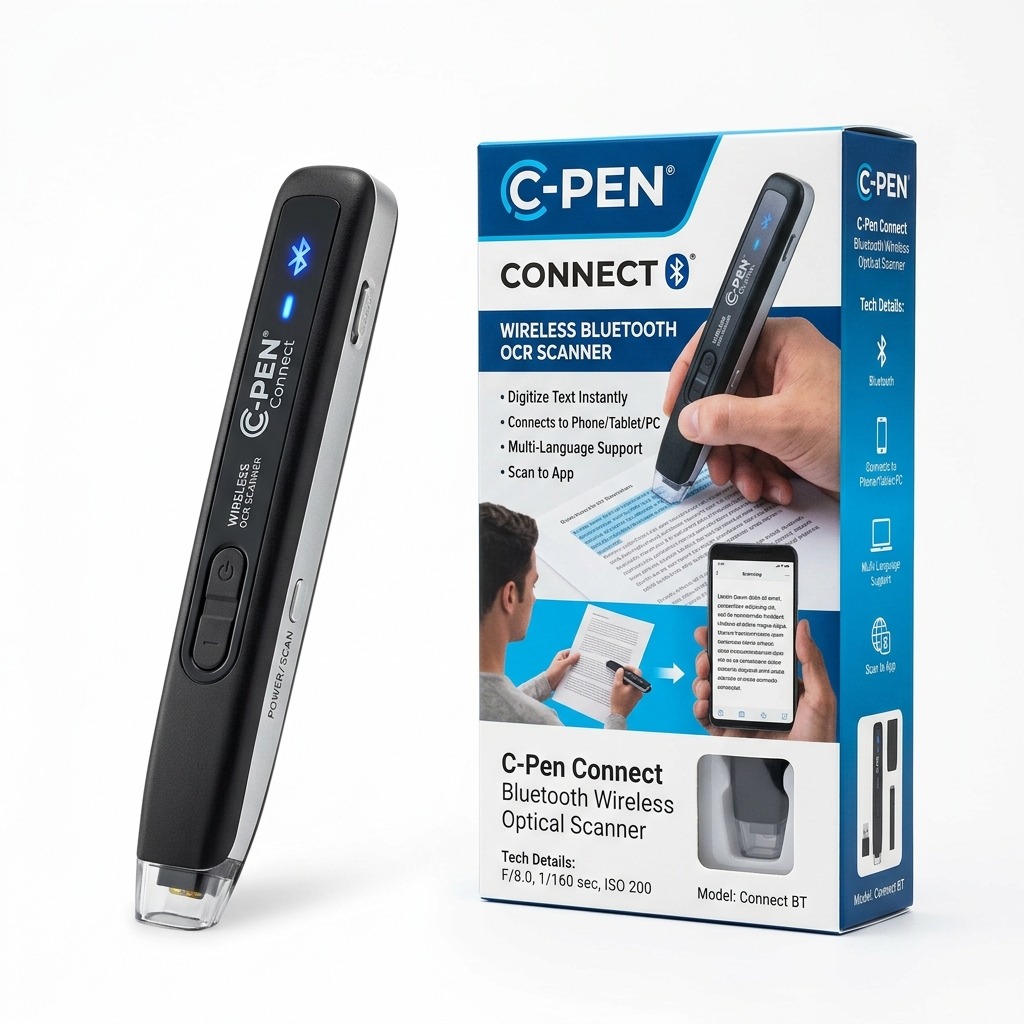
C-Pen Connect
Wireless Bluetooth text scanner wand
From $149
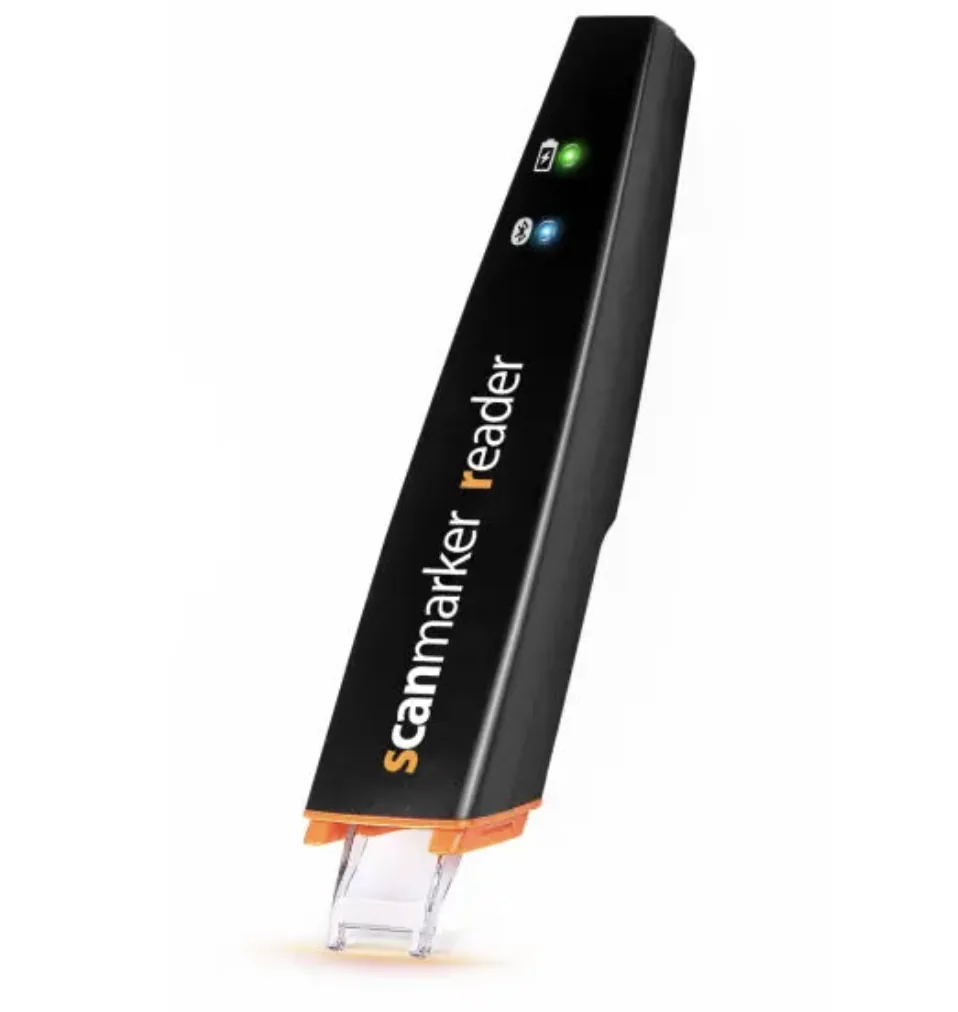
Scanmarker Reader
Budget read-aloud, connected
From $149
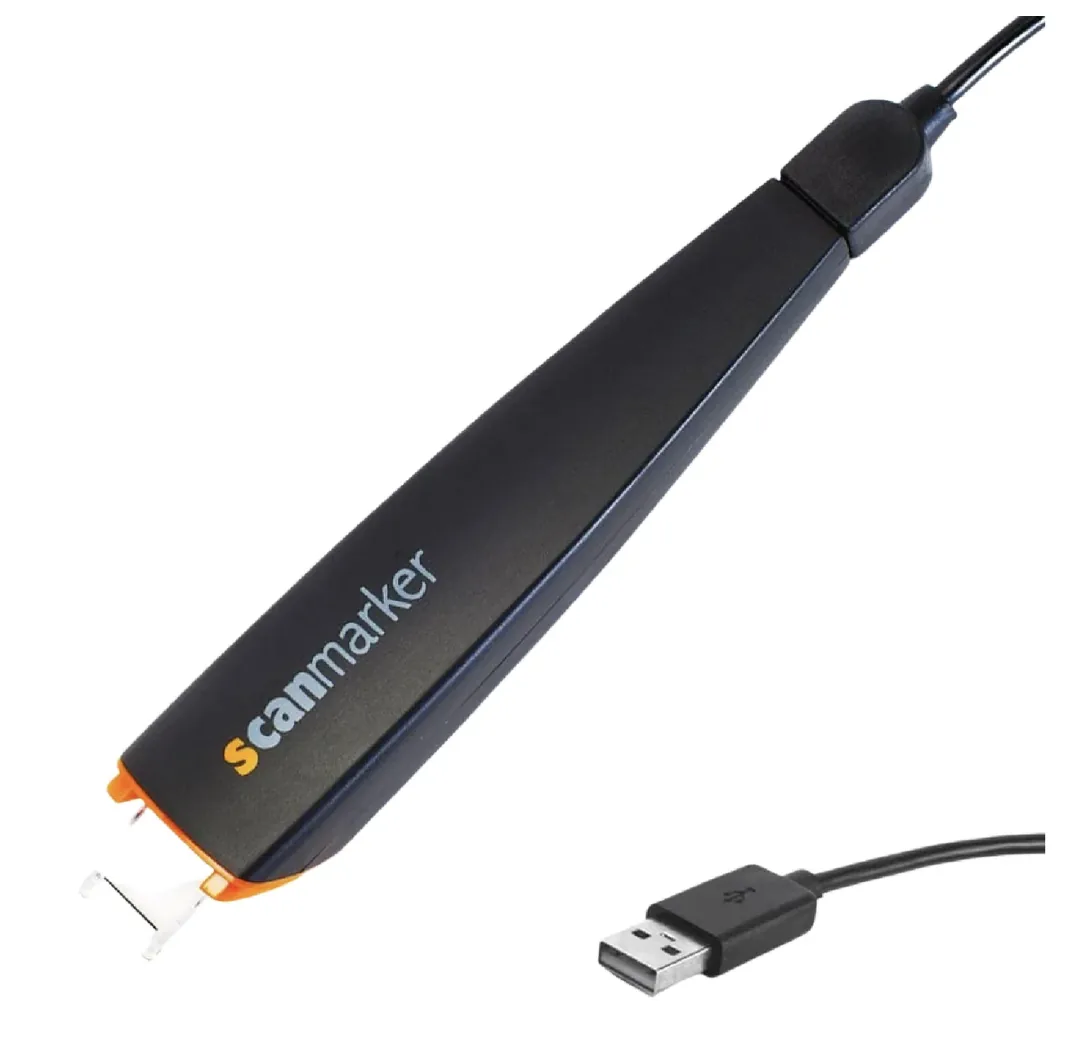
Scanmarker USB
Plug-in pen for shared computers
From $79
03 · Reading Support
Dyslexia, TTS & Access
How reading pens support dyslexia, text-to-speech for struggling readers, phonics modules, accessibility accommodations, and reading independence.
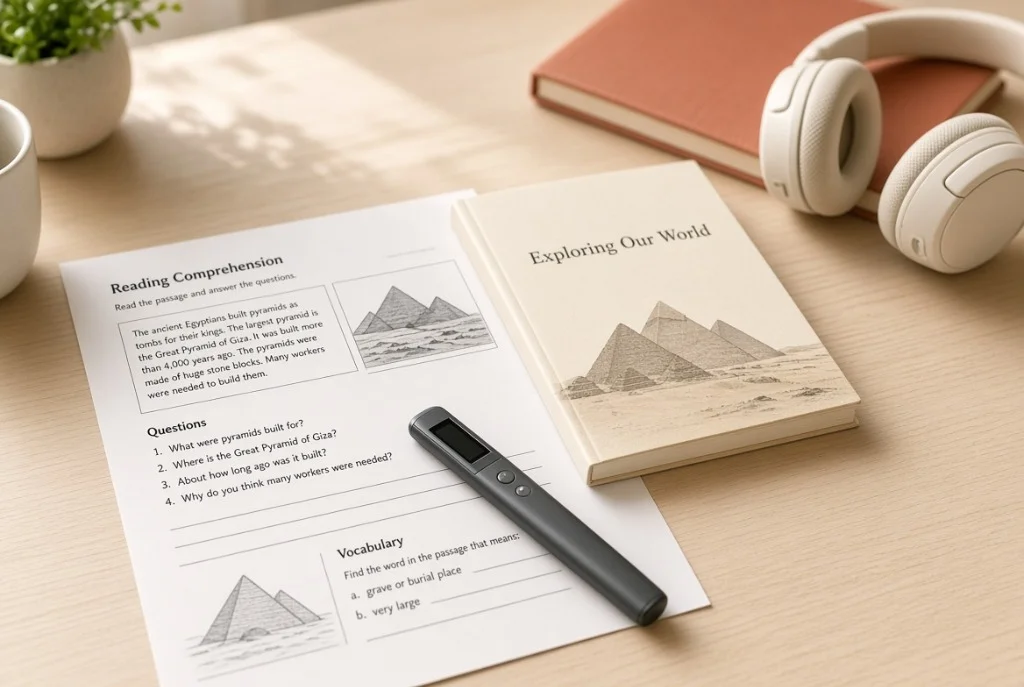
Reading Pens for Dyslexia: How Assistive Audio Pens Work
A complete guide to reading pens for dyslexia: how line-by-line text-to-speech unlocks comprehension, IEP accommodations, and key device limitations.
Read →How Reading Pens Help With Dyslexia
A reading pen is an access tool, not a treatment — it helps get past a stuck word without stopping the whole page. Where that helps, and where it does not.
Read →
What Tools Help With Dyslexia?
Tools that help with dyslexia: text-to-speech, reading pens, audiobooks, screen readers, word prediction — each removes a different barrier.
Read →04 · School
Classroom, IEP & Funding
Classroom reading pens, IEP and 504 accommodation documentation, exam-lock modes, school district procurement, and assistive technology funding.
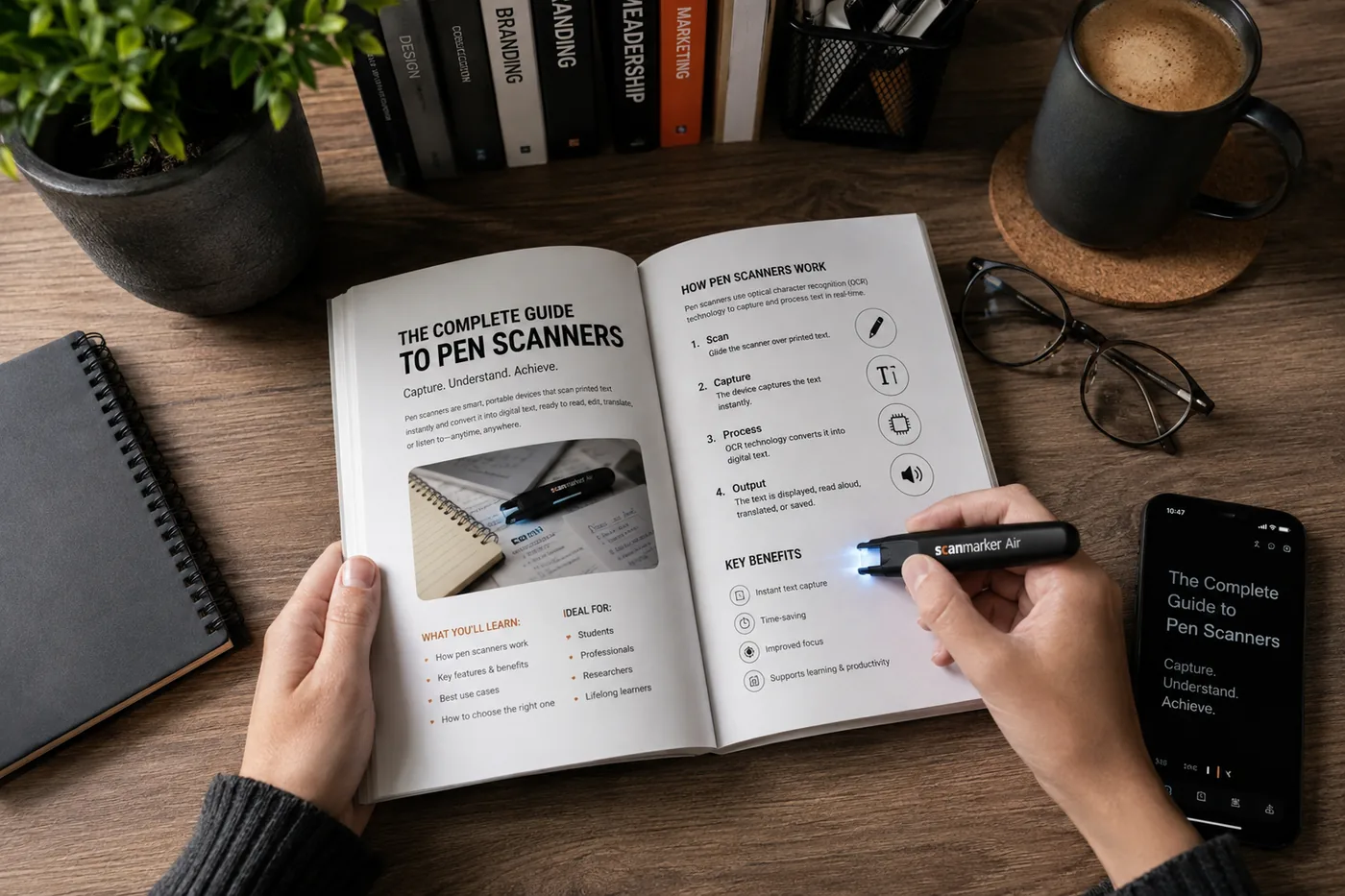
Study Tools for Students
The best study tools fall into four categories: capture, organization, review (spaced repetition), and low-tech staples. A real system combines all four.
Read →
Assistive Technology in Schools
Assistive technology in schools helps students access curriculum and demonstrate knowledge. IDEA requires AT consideration in every IEP review.
Read →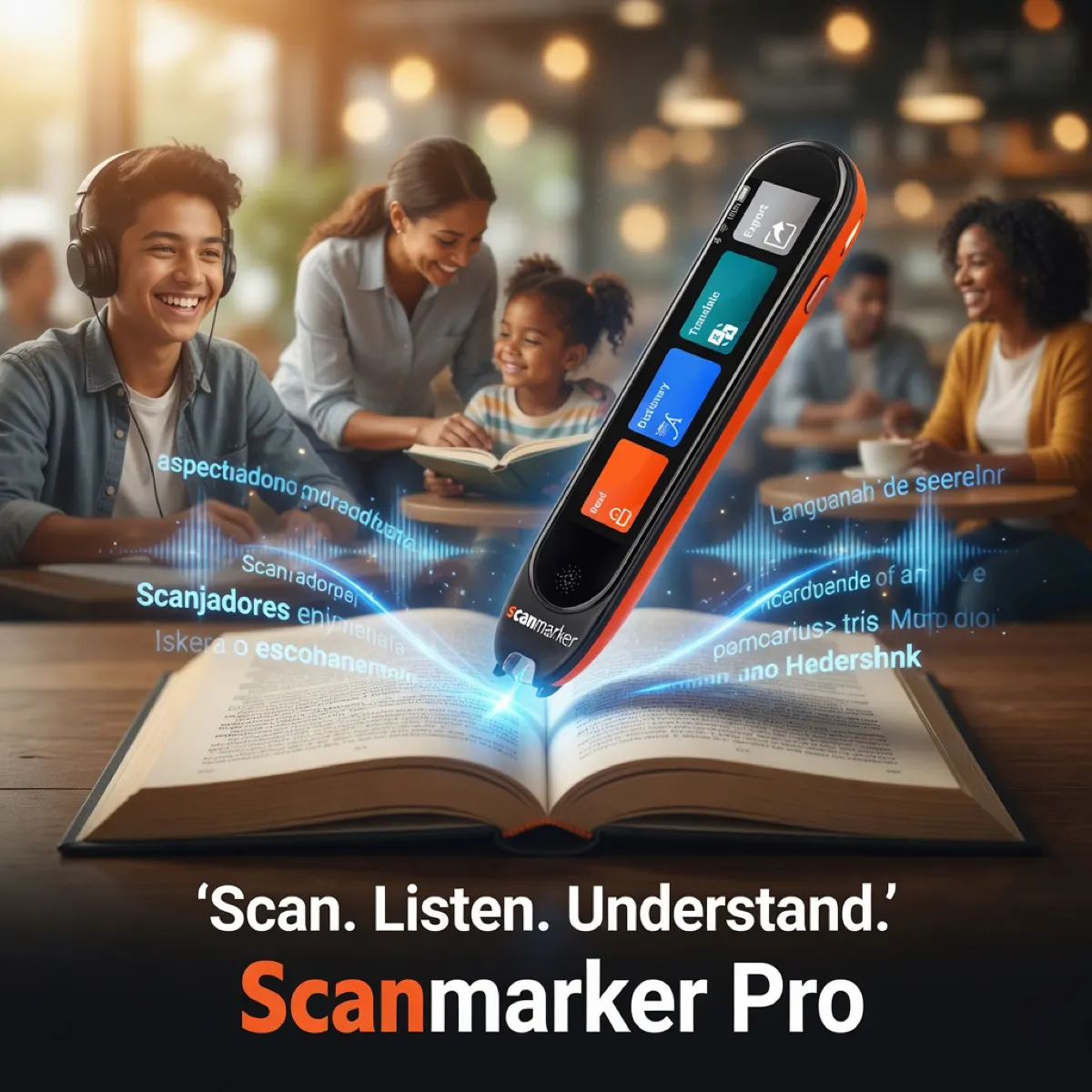
Writing Reading Pens Into an IEP or 504 Plan
Write reading pen accommodations into an IEP or 504 with specific, testable language — name the function, not the brand, or it won't travel across teachers.
Read →05 · OCR & Work
Notes, Documents & Productivity
Scan printed book lines directly into notes, laptops, Google Docs, and Word. Complete productivity guides for students, researchers, and desk workflows.
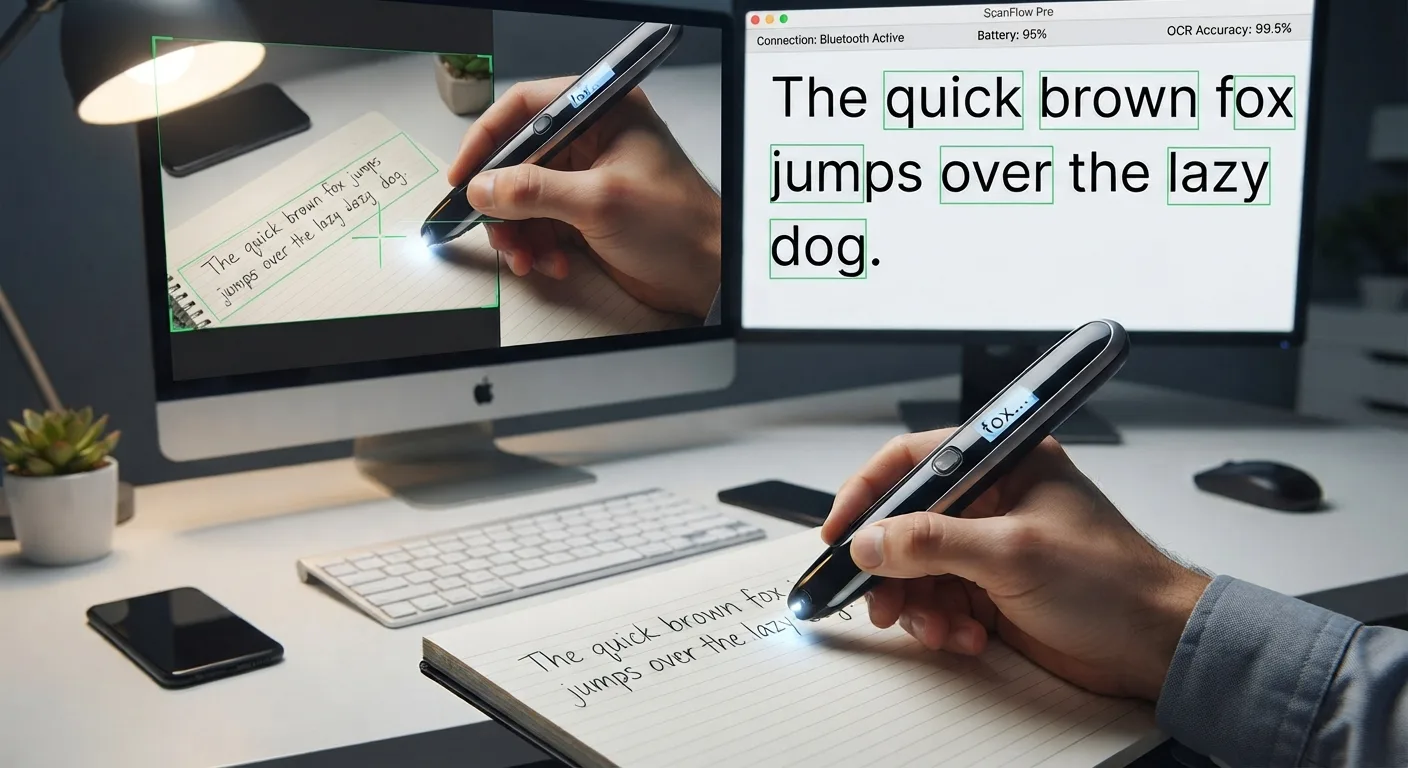
OCR for Students: Digitizing Notes & Textbook Study Guides
For students, OCR turns textbook pages and handouts into searchable, speakable text — best on clean print, less reliable on handwritten notes.
Read →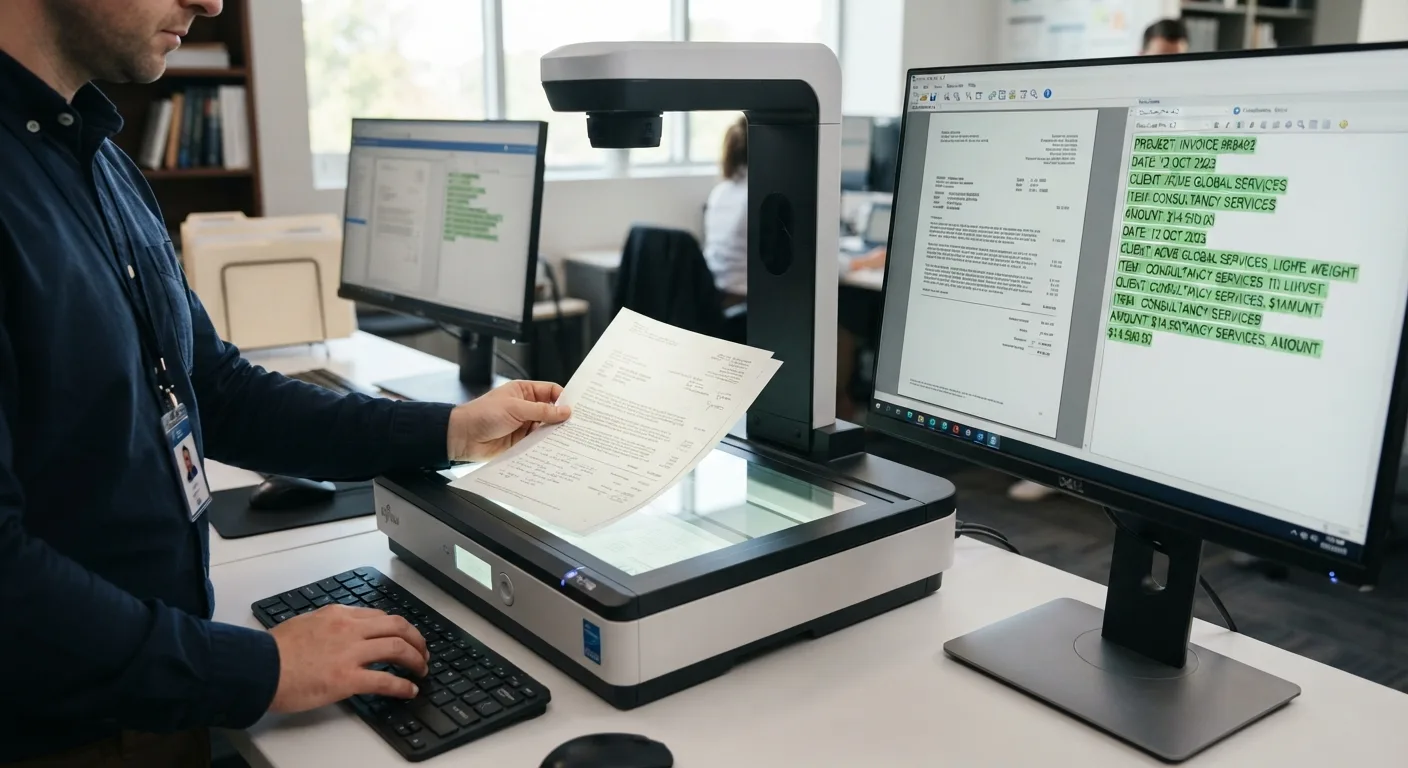
OCR for Researchers
Researchers use OCR to digitize archival documents into searchable files — accuracy varies with source condition, so manual review still matters.
Read →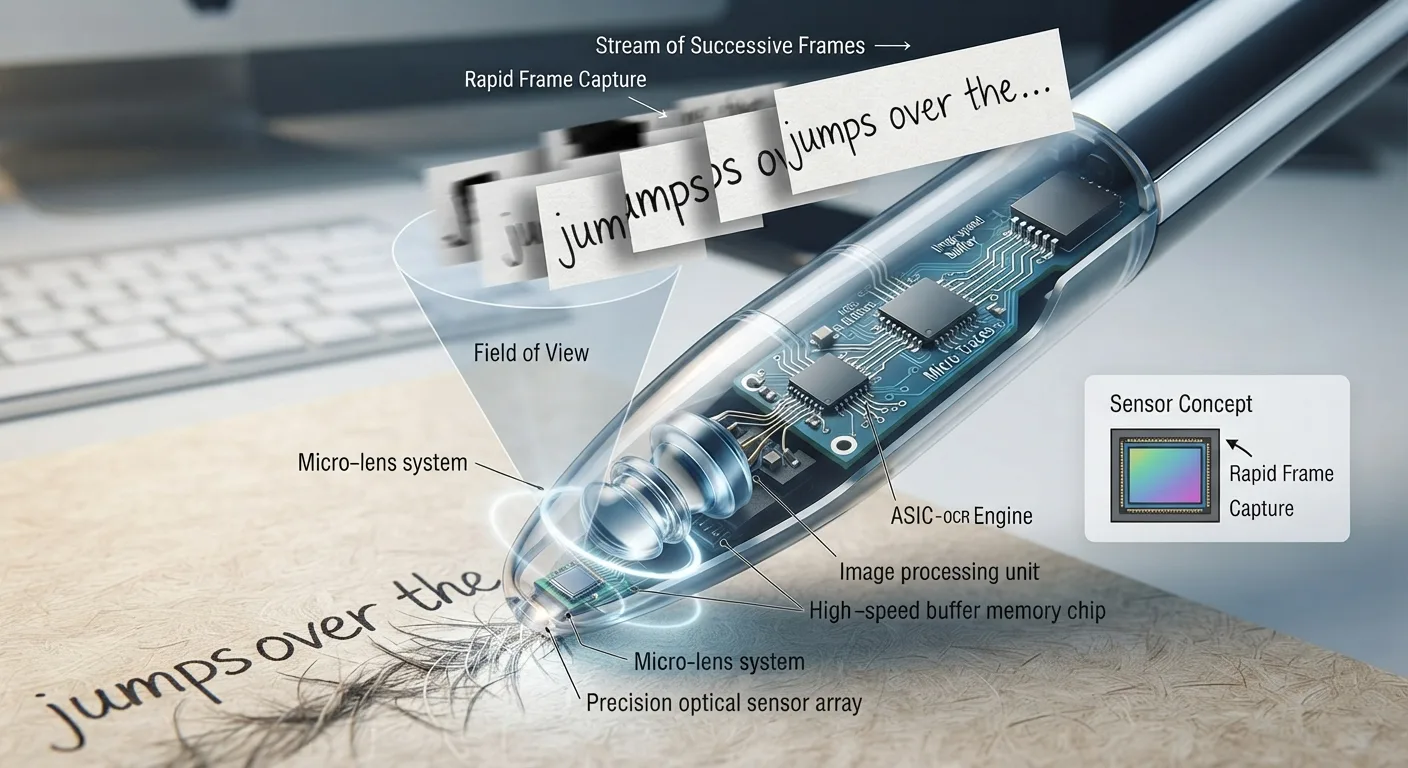
Scanning Text Into Notes
Scanning text into notes captures printed words as searchable digital text. Best options: a phone app for full pages, a pen scanner for short passages.
Read →06 · Comparisons & Buying
Pen vs Phone & Buying Guides
Head-to-head comparisons of pen scanners vs smartphones, flatbed scanners, and standalone vs connected reading pens. Objective buyer decision guides.
Are Pen Scanners Worth It?
Pen scanners are worth it for frequent hands-free, word-by-word listening — for occasional scanning, a free phone app usually covers the same ground.
Read →
Pen Scanner vs Phone Apps: Which Scanning Tool Is Best?
Pen scanner vs smartphone camera OCR apps: comparing speed, distraction-free study, classroom compliance, ergonomics, and battery endurance.
Read →Pen Scanner vs Scanner
A pen scanner handles quick, portable, line-by-line reading; a flatbed scanner digitizes full pages at higher quality for archiving and bulk work.
Read →Featured guide
Best Reading Pens for Dyslexia: Standalone Models Compared
An honest comparison of current reading pens for dyslexia — which models actually fit, and which are built for a different job.
Read the guide →How a pen scanner works
Physical paper page
High-speed camera tip
Stitched frame strip
Character recognition
Text, Speech, or Export
Read the complete step-by-step pipeline explainer: Anatomy of a Scan →
What kind of pen scanner do you actually need?
Three editorial comparisons to bridge from "what is this category" to "which one."
See all comparisons →Looking for a reading pen?
Once you know whether you need a standalone reading pen or a connected scanner, selecting the right hardware architecture is much simpler.
Pen Scanner Journal is the independent category reference library for pen scanners. How reviews work
Editorial pick
Scanmarker Max
Most recommended across our guides — standalone, touchscreen, exam-ready.
- Best for
- Full independence — exam-approved, phonics-ready
From $299
SEN Standard
C-Pen Reader 2
The classic SEN reading benchmark with built-in dictionary and audio read-aloud.
- Best for
- Classroom reading support, SEN accommodations, and dictionary lookup
From $399
Best for early readers
Scanmarker PAL
Simple, durable standalone read-aloud designed for early learners.
- Best for
- Simple, immediate read-aloud with nothing to configure
From $179
JCQ Exam Certified
C-Pen Exam Reader 2
Locked exam-board certified reading pen with permanently disabled dictionary.
- Best for
- Official test accommodations — UK JCQ, SEC & state testing approved
From $399
AUDIENCE PATHS
Find guides for your situation
Clear information paths tailored to who you are reading for.
Students
Study tools, reading support, vocabulary, and independent learning productivity.
Explore path → PARENTSParents
Reading support, dyslexia accommodations, homework routines, and choosing a device.
Explore path → TEACHERSTeachers & Schools
Classroom workflows, ESL support, IEP/504 accommodations, and district funding.
Explore path → WORK & ADULTSAdults & Workplace
Workplace documents, reading efficiency, digitizing print, and everyday productivity.
Explore path → LANGUAGESLanguage Learners
Translation accuracy, dual-language vocabulary, and reading non-native print.
Explore path →SPECIALIST REFERENCE NETWORK
Independent Reading & Scanning Portals
Explore dedicated sister publications and specialist resources focused on specific reading needs, educational procurement, and handheld OCR hardware.
Pen for Dyslexia
Parent-first guides for evaluating standalone reading pens, homework accommodations, and phonics reinforcement at home.
Visit penfordyslexia.com →Dyslexia Scanmarker
In-depth coverage of assistive reading technology, audio text-to-speech tools, and structured literacy decoding.
Visit dyslexiascanmarker.com →Scanmarker for Schools
Educational funding paths, Title I/III grant allocations, IEP accommodation guidelines, and district quotes.
Visit scanmarkerforschools.com →Pen Scanning
Focused on optical highlighters, digital transcription workflows, and direct keystroke injection into computer software.
Visit penscanning.com →Scanner Reader
Dedicated evaluations of standalone scanner readers, portable OCR audio wands, and multisensory learning aids.
Visit scannerreader.co →Pen Scanner Org
Open reference specs, optical sensor benchmarks, firmware standards, and scanning performance metrics.
Visit penscanner.org →Pen Scanner Co
Comprehensive pen scanner comparisons, model directory, portable OCR feature tables, and device selection guides.
Visit penscanner.co →Editorial standards
Our review & evaluation standards
How we test scanning speed, OCR accuracy, text-to-speech voice quality, and offline capabilities.
Read our complete testing methodology →FAQ
Are these reviews independent?
Pen Scanner Journal is the specialist category reference library for pen scanners. Guides cover standalone reading pens, tethered OCR pens, and assistive text tools with objective technical evaluation, including identifying where a pen scanner is the wrong tool for the job.
How often is this updated?
Guides are revised as models and pricing change. Current as of 2026.
Do you cover classroom use?
Yes — ESL classroom workflow, exam accommodation rules, and district funding are each covered in depth.