
What a Pen Scanner Is
Understand what a pen scanner is, how optical character recognition works, core hardware architectures, and how reading pens support learning.
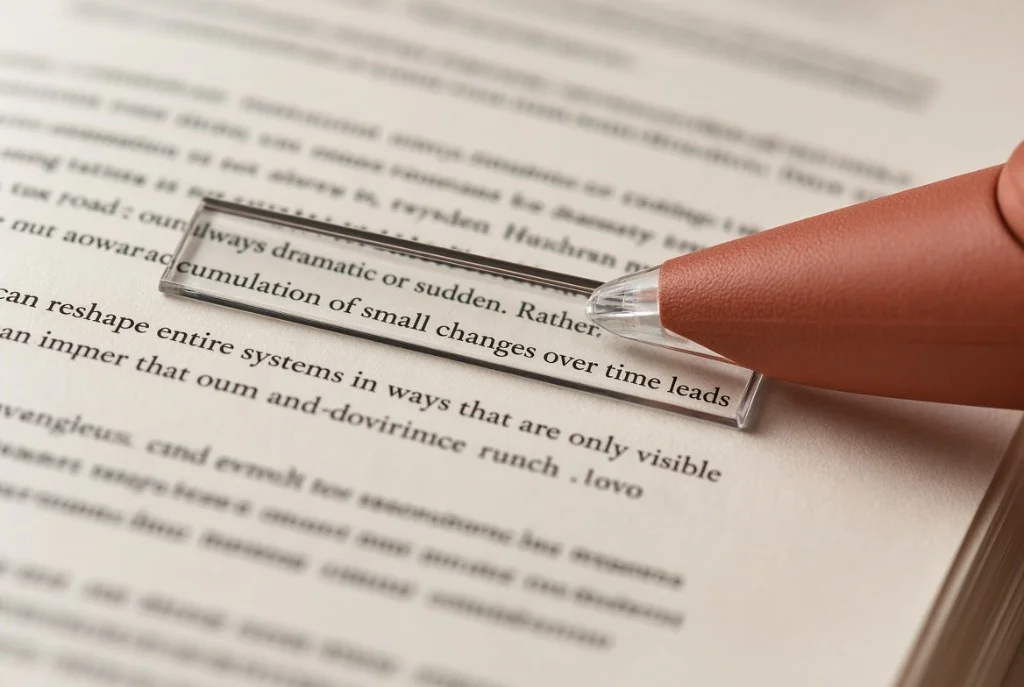
What Is a Pen Scanner? Complete Explainer & How It Works
What is a pen scanner? A complete, plain-English explainer covering optical character recognition, text-to-speech, core device types, and real-world limits.
Read guide →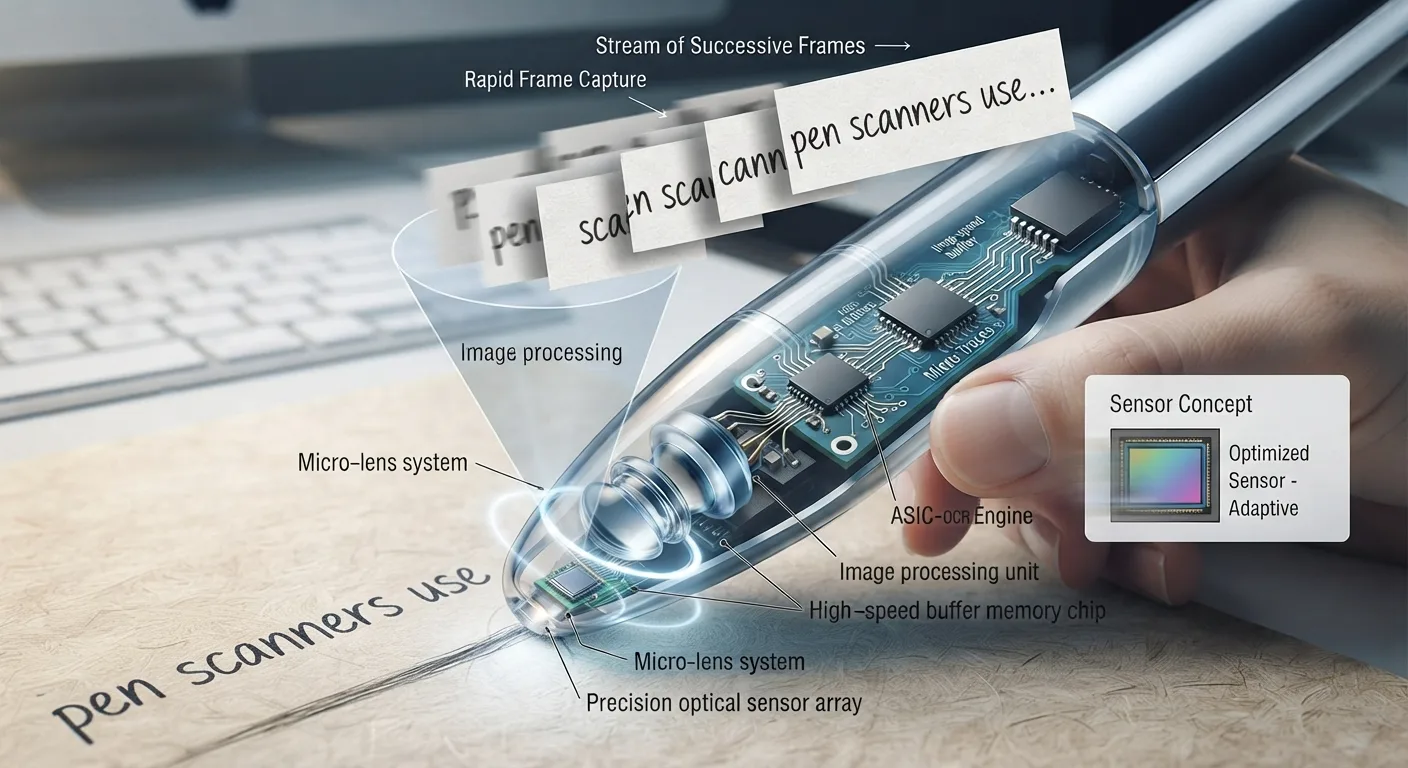
How Does a Pen Scanner Work? Hardware, Optics & Sub-Second OCR
A technical teardown of how pen scanners work: optical illumination, 120 fps CMOS sensors, DSP frame stitching, embedded neural OCR, and audio DAC synthesis.
Read guide →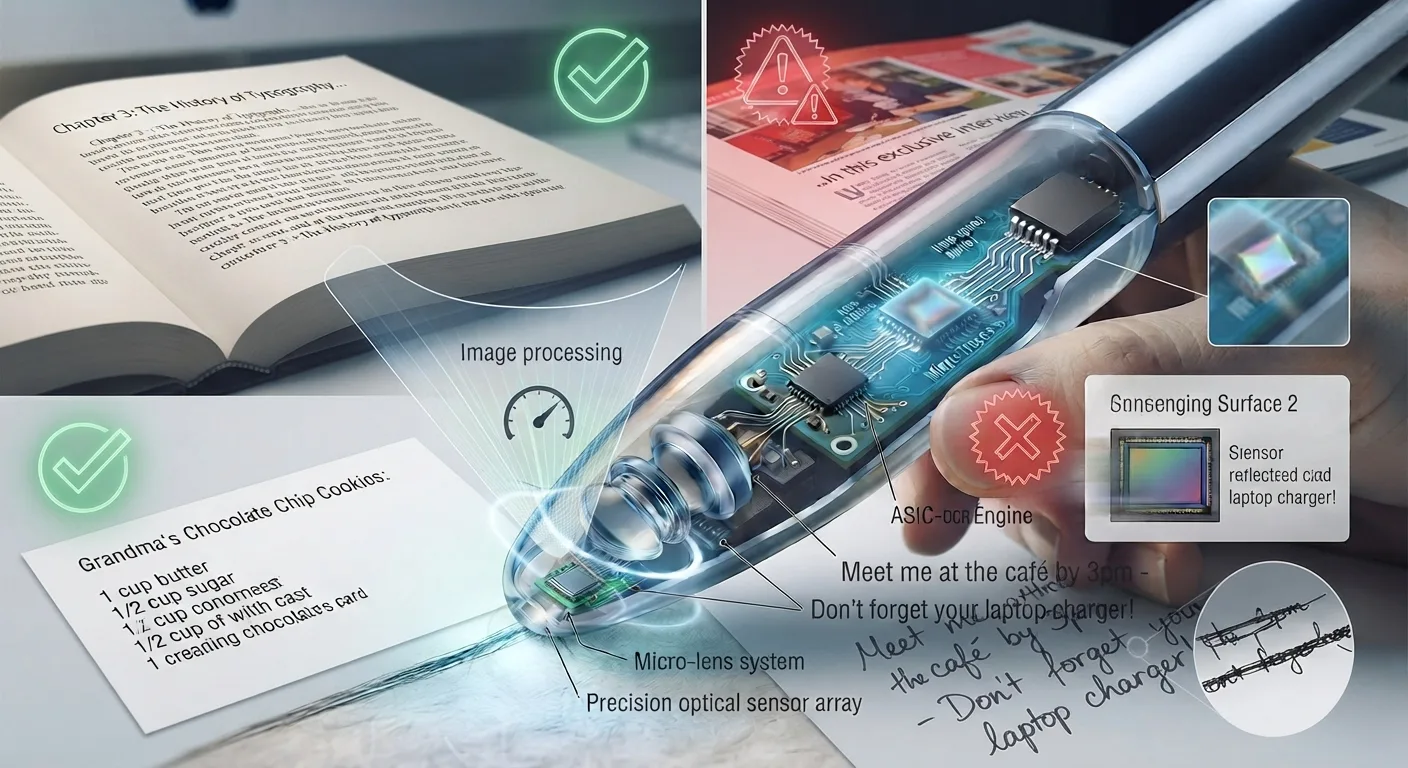
What Can You Scan With a Pen Scanner? Materials, Fonts & Surfaces
Complete compatibility guide: which paper stocks, font sizes (6pt–24pt), fonts, and languages pen scanners can read, and where physical limits cause failures.
Read guide →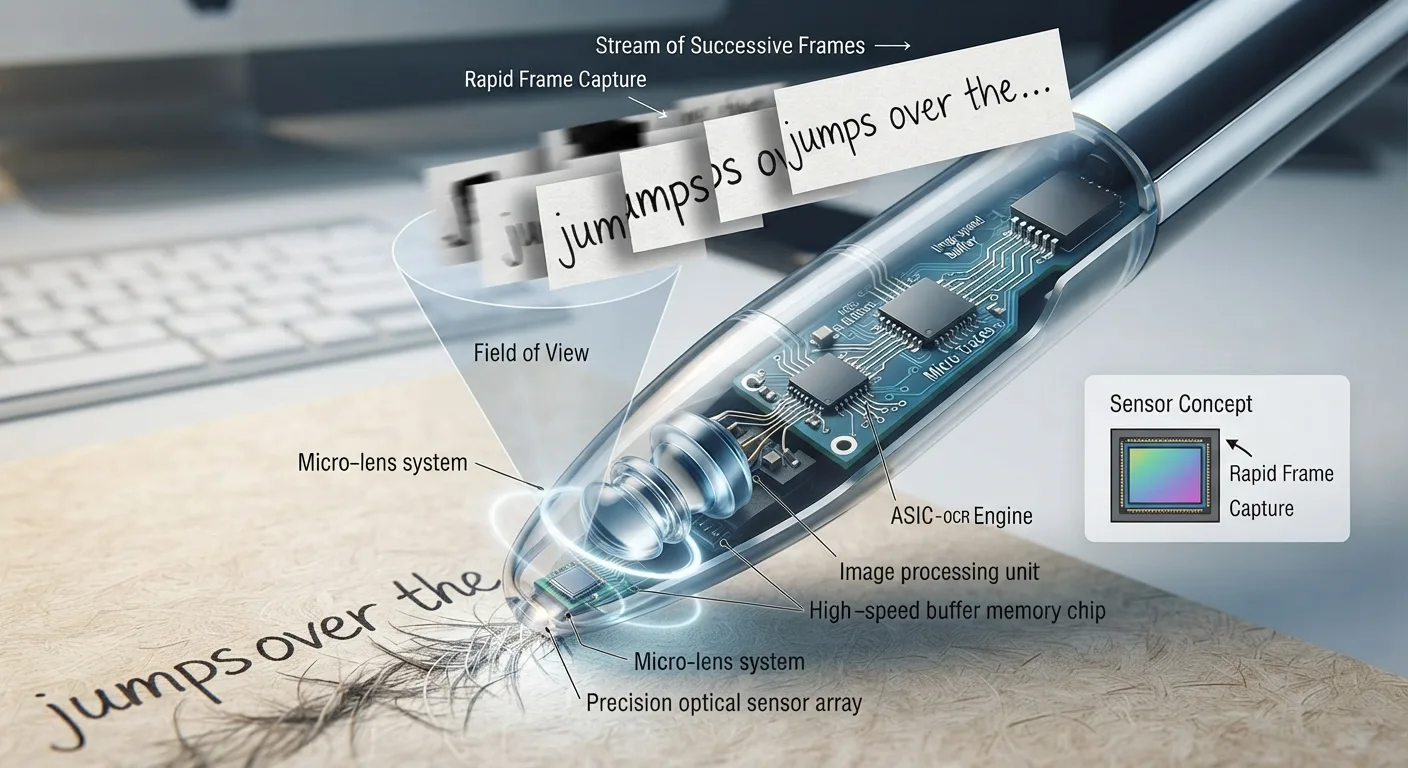
What Is OCR and How Does It Work? The Simple, Plain-English Guide
What is OCR? A friendly, plain-English explainer: how computers read printed ink, why tricky letters get confused, and how modern reading pens use it.
Read guide →
Standalone Reading Pens Explained: Hardware & Exam Security
What "standalone" means in assistive reading technology: independent ARM processors, built-in audio speakers, exam-lockout modes, and zero phone distractions.
Read guide →