
What's Actually Normal (And What Isn't)
Reading develops on a wide but not infinite range. Kindergarten through 1st grade is when decoding is explicitly taught, so struggling here is expected, not a red flag on its own. By the end of 2nd grade, most kids should be reading simple books with reasonable fluency — continued heavy sounding-out of common words at this point is worth watching. By 3rd grade, the shift from "learning to read" to "reading to learn" happens, and a student still struggling with basic decoding at this stage is at real risk of falling behind across every subject, not just reading, because every subject now assumes reading fluency.
Signs worth a conversation with the school, especially if several appear together: persistent difficulty connecting letters to sounds well past the age it's typically taught, reading noticeably below grade level compared to peers, strong listening comprehension paired with weak reading comprehension, avoiding reading tasks or unusual frustration around reading, and a family history of dyslexia or reading difficulty.
None of these alone means dyslexia or any other specific diagnosis. Together, and persisting over time, they're a legitimate reason to request an evaluation — which is your right to request in writing at any point, not something you have to wait for the school to suggest.
What You Can Do Tonight, Before Any Evaluation
You don't need a diagnosis to start helping.
Read aloud to them, above their reading level
This works precisely because it doesn't require your child to decode anything. Reading aloud above their independent reading level keeps vocabulary, comprehension, and love of story developing on a separate track from decoding skill.
Remove the decoding bottleneck for non-reading homework
A science worksheet is testing science knowledge, not reading ability — but if your child can't decode the questions, it becomes a reading test by accident. Reading questions aloud yourself, or using a text-to-speech tool, keeps content-area homework testing what it's supposed to test.
Let them choose what they read
Comic books, graphic novels, joke books — reading volume matters more than reading "quality" at this stage, and volume only happens with material a kid actually wants to pick up voluntarily.
Watch for avoidance, and name it without shame
"I noticed reading time has been hard lately — is it feeling frustrating?" does more good than either ignoring the avoidance or pushing through it.
Tools That Can Help
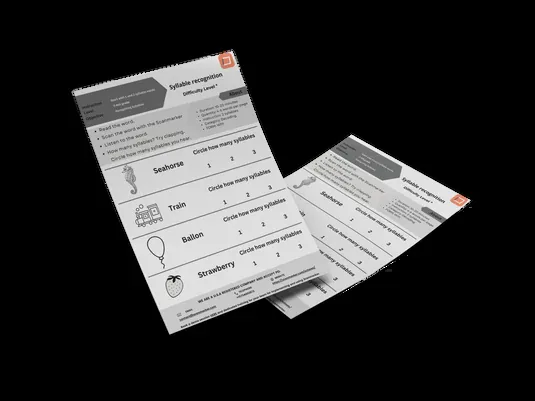
Audiobooks paired with the print copy, where possible — following along in text while listening builds the sound-to-print connection, not just passive listening. A reading pen for printed material specifically can remove the decoding bottleneck from non-reading tasks immediately, without waiting on any school process. Structured phonics practice, ideally aligned with whatever approach the school uses, so home practice reinforces rather than conflicts with classroom instruction.
When to Push for a Formal Evaluation
If the signs above are persisting past the age they're typically expected to resolve, put the request in writing to the school. A written request starts a legal clock the school has to respond to. You don't need to have all the answers — "I'd like to request a formal evaluation to understand why my child is struggling with reading" is enough.