
The one-sentence definition
Structured literacy is an approach to teaching reading that is explicit, systematic, cumulative, multisensory, and diagnostic, covering phonology, sound-symbol association, syllable instruction, morphology, syntax, and semantics in a planned sequence. That is the formal definition from the International Dyslexia Association.
Explicit means the teacher directly teaches the rules and patterns rather than expecting students to figure out the alphabetic principle on their own. Systematic means skills are introduced in a planned order, from simplest to most complex. Cumulative means each new skill builds on previously taught skills. Multisensory means students see the letters, hear the sounds, say the sounds, and write the letters, often simultaneously. Diagnostic means the teacher is constantly checking what each student knows and adjusting instruction.
Where structured literacy comes from
Structured literacy's lineage traces to the Orton-Gillingham approach, developed in the 1930s by Samuel Orton and Anna Gillingham specifically for students with dyslexia. For decades it was used primarily in clinical settings and specialized schools.
The shift to mainstream came in the 2000s when the National Reading Panel and subsequent research syntheses confirmed what Orton-Gillingham practitioners had documented clinically: explicit, systematic phonics instruction produces better outcomes than discovery-based approaches. By the mid-2020s, multiple US states had adopted "science of reading" legislation requiring K-3 instruction to align with structured literacy principles.
What it looks like in practice
Teaching the short-a sound in kindergarten: the teacher says, "This is the letter a. It says /a/. Say /a/." Students repeat the sound, write the letter, and trace it in the air. The teacher introduces a few words with short-a — cat, hat, mat, sat, bat — and students sound out and blend each word until they reliably read short-a words before new patterns are introduced.
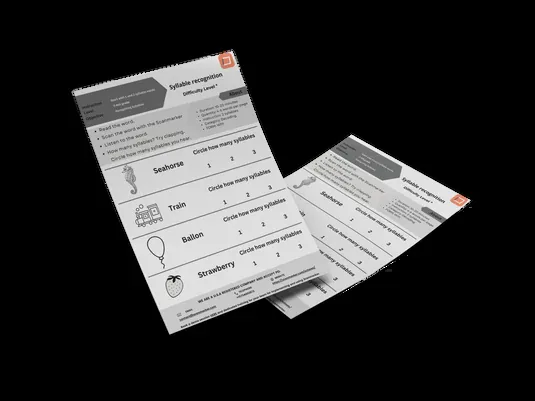
Teaching the closed syllable in first grade: the teacher explicitly defines a closed syllable as one vowel followed by one or more consonants, where the vowel makes its short sound. Students practice marking syllable types in words like "cat" and "cabin" before the next syllable type is introduced.
Teaching a Greek root in third grade: the teacher introduces a root such as "tele-" (far), and students see and discuss words built on it — telephone, telescope, telegraph, television. Vocabulary, decoding, and meaning are taught together rather than as separate skills.
Why structured literacy works, especially for dyslexia
The case for structured literacy is neurological, not ideological. Reading is not natural the way spoken language is; the brain has to repurpose visual processing regions to recognize letters and connect them to sounds. For most children that repurposing happens with relatively modest instruction; for students with dyslexia or significant reading challenges, it requires explicit, systematic, repeated practice.
Structured literacy works because it matches what the reading brain needs: explicit sound-symbol association builds the underlying letter-sound circuit that all reading depends on; systematic progression prevents gaps that compound in students who don't pick up patterns implicitly; multisensory practice strengthens encoding by activating multiple brain pathways simultaneously; cumulative review ensures previously taught patterns become automatic; and diagnostic monitoring catches and remediates gaps before they compound.
Students without dyslexia also benefit — they just don't need this level of structure to learn to read, because they tolerate looser approaches by making up the gap themselves. Students with dyslexia do not have that compensatory ability, and looser approaches leave them further behind every year.
How it differs from balanced literacy
The most common alternative is "balanced literacy," popularized in the 1990s, which emphasizes reading authentic, often leveled, books from day one; discovery of patterns through exposure rather than explicit teaching; use of context, picture, and meaning cues to identify unknown words (the "three-cueing" model); and phonics taught as a smaller, less systematic component.
The three-cueing model — teaching students to guess at words using context — is the single most-criticized element. Research has consistently shown that good readers use phonics decoding first and context second, while struggling readers do the opposite. Teaching all readers to use context first trains good readers to guess instead of decode, and leaves struggling readers without the tool they most need.
Structured literacy isn't anti-context — meaning matters — but it teaches decoding first and uses context for comprehension, not word identification.
How assistive technology fits in
A structured-literacy classroom and assistive technology pair naturally. Once students have foundational decoding skills, they still encounter grade-level content texts with vocabulary beyond their fluency level, and a reading pen like Scanmarker Max provides read-aloud on demand without disrupting structured-literacy instruction.
Scanmarker Max is unusual in that it breaks scanned words into phonemes and syllables on its display, which is the same structured-literacy decoding approach the classroom is teaching. The accommodation reinforces instruction instead of bypassing it.
What to do this week without a curriculum overhaul
Most teachers cannot single-handedly change their school's adopted reading curriculum, but structured-literacy principles can be adopted inside whatever curriculum is in use: make phonics instruction explicit and daily, even 15 minutes produces measurable improvement; use decodable texts during phonics practice so what students read matches what they've been taught; stop teaching three-cueing, and when a student stumbles, prompt them to decode rather than guess from the picture; add multisensory components, such as writing letters in sand or air while saying sounds; and track each student's phonics knowledge explicitly.