
Removing the bottleneck, not the difficulty
For someone who struggles to decode text — sound out and recognize written words quickly — the words on a page can be a bottleneck long before the ideas in them are. Reading technology exists to move that bottleneck: instead of the reader having to decode every word before they can understand a sentence, the technology handles the decoding step, and the reader can focus on meaning.
This is a genuinely different function from reading instruction. Instruction is about building the decoding skill itself, gradually, through practice. Technology is about getting past the need to decode in a specific moment, so a person isn't blocked from a task while that skill is still developing.
Text-to-speech: hearing the words
The most common form of reading technology is text-to-speech, which reads digital text aloud, often highlighting each word or sentence as it's spoken. Hearing and seeing the text together can make it easier to follow the flow of a sentence and keep pace with longer passages than reading silently alone.
Scanning printed text into speech
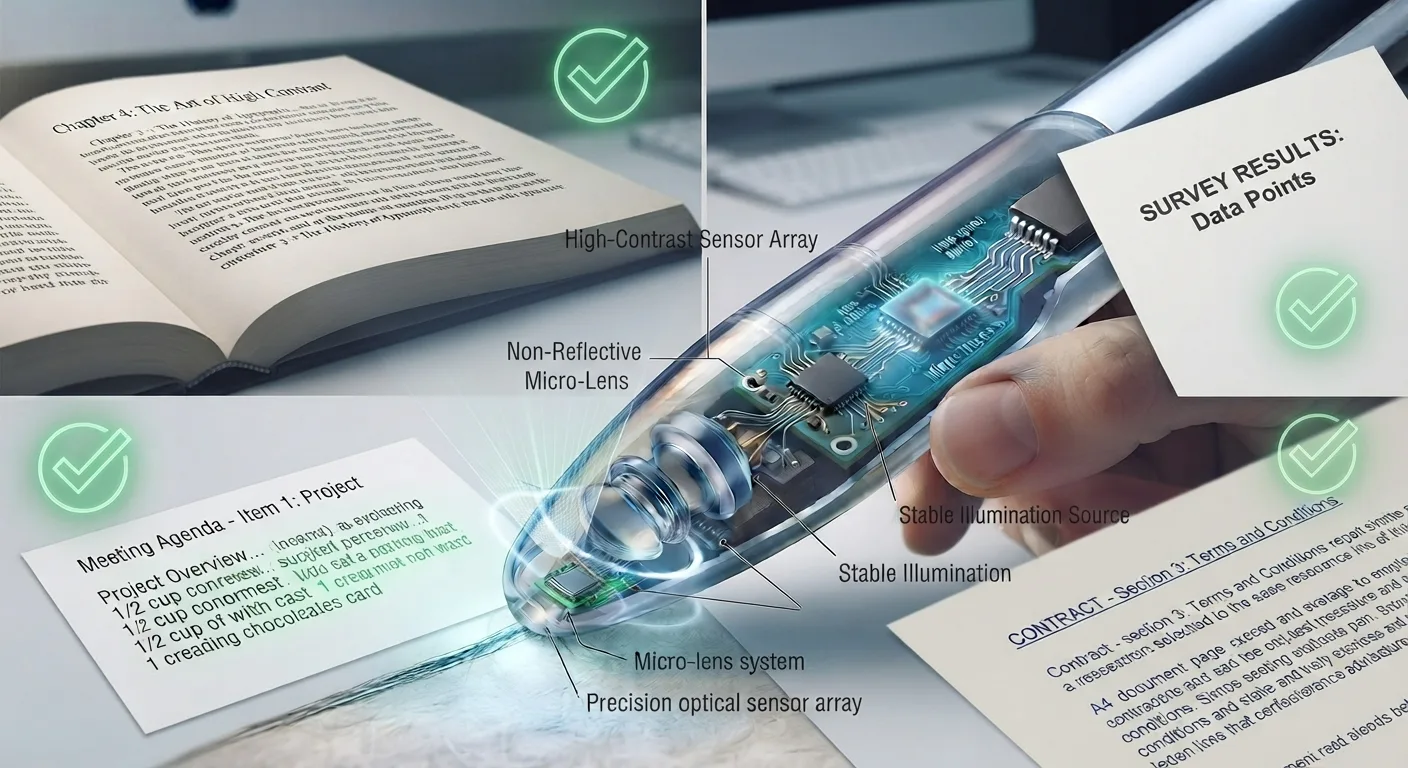
Not everything is digital. Worksheets, printed books, forms, and physical mail all require a different approach: a device or app that scans the printed line and converts it to speech on the spot. This is the specific job a reading pen does — it doesn't replace text-to-speech software, it extends the same idea to paper.
Visual adjustments
Some reading technology changes how text looks rather than adding audio: adjustable fonts, increased line spacing, colored overlays, or reduced visual clutter on a page. These changes can reduce visual crowding that makes it harder to track from one word to the next, independent of any audio support.
Word lookup and definitions
Built-in dictionary or translation features let a reader tap or scan an unfamiliar word and get an instant definition, rather than stopping to search separately or guessing from context. This keeps a reader inside the task instead of pulling them out of it every time they hit a word they don't know.
What technology does not replace
None of these tools teach decoding skills. A student who relies entirely on text-to-speech for years without any structured literacy instruction will still struggle to decode unfamiliar printed text independently. The two work best together: instruction builds the underlying skill over time, and technology provides access to grade-level content and tasks while that skill is still developing.